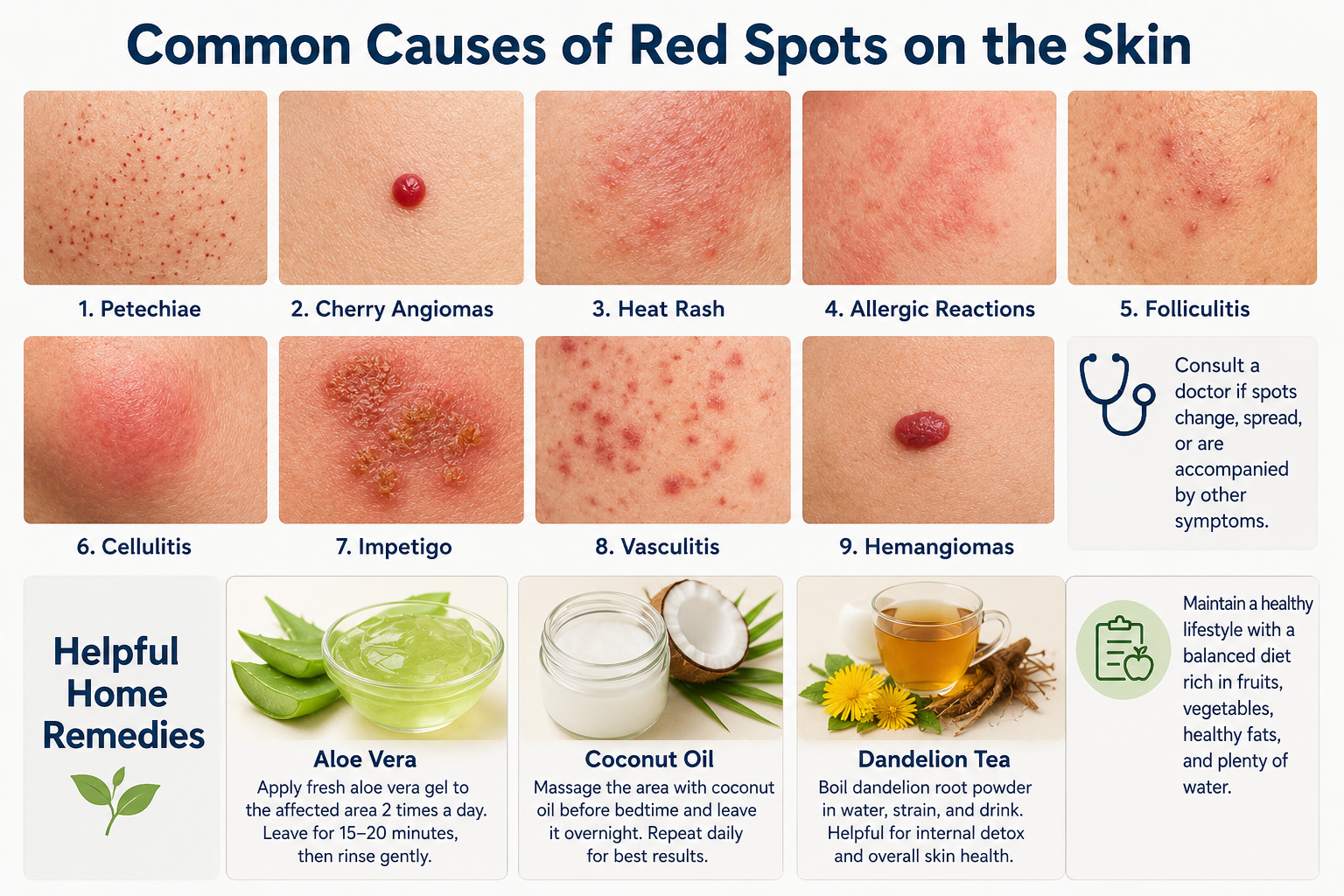
Unexpected red spots on the skin can have many different causes, ranging from mild irritation to medical conditions that require professional evaluation. Their appearance may vary in size, shape, and texture, making it important to avoid self-diagnosis based on appearance alone. While many cases are harmless and temporary, persistent, rapidly changing, or painful skin changes should always be assessed by a qualified healthcare provider for an accurate diagnosis and appropriate treatment.
Some of the more common explanations include allergic reactions, heat rash, insect bites, inflamed hair follicles (folliculitis), and harmless growths known as cherry angiomas, which often become more common with age. Tiny flat red or purple spots, called petechiae or purpura, may occur when small blood vessels leak beneath the skin and can sometimes be associated with infections, medications, or blood-related conditions. Less common but more serious causes, such as cellulitis, vasculitis, or other inflammatory disorders, typically require prompt medical attention, particularly if accompanied by fever, swelling, significant pain, or rapidly spreading redness.
Supporting overall skin health starts with healthy daily habits. Keeping the skin clean, staying well hydrated, protecting it from excessive sun exposure, and using fragrance-free skincare products when appropriate may help reduce irritation. Some people also find soothing ingredients such as pure aloe vera gel or a gentle, fragrance-free moisturizer helpful for minor skin discomfort. However, natural remedies should never replace medical evaluation when symptoms are severe, persistent, or worsening, and herbal supplements should only be used after discussing them with a healthcare professional, especially if you take medications or have underlying health conditions.
Paying attention to changes in your skin is an important part of maintaining overall health. If red spots change in color, size, or number, begin to bleed, become painful, or are accompanied by symptoms such as fever, fatigue, or unexplained bruising, it is important to seek medical advice without delay. Early evaluation can help identify the underlying cause and ensure appropriate treatment, while routine healthy lifestyle choices—including a balanced diet rich in fruits, vegetables, whole grains, healthy fats, and adequate hydration—can support both skin health and overall well-being.