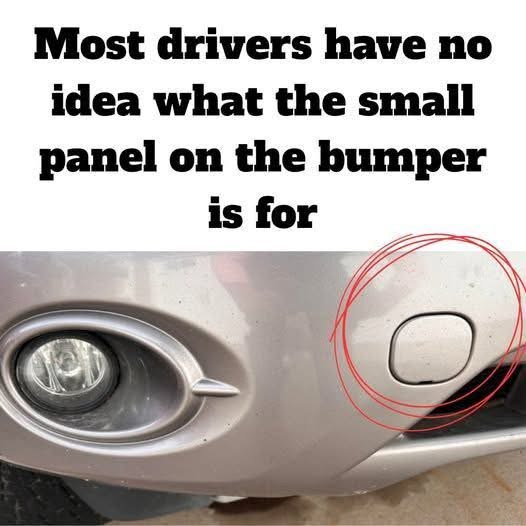
Modern vehicles are filled with thoughtful design features, many of which go unnoticed during everyday driving. One small detail that often sparks curiosity is the square or rectangular panel built into the front or rear bumper. While it may appear to be a decorative part of the vehicle’s exterior, it actually conceals an important safety feature known as the tow hook socket. This built-in connection point is designed to help move a vehicle safely if it becomes disabled or needs roadside assistance.
Automakers typically place the tow hook socket behind a removable cover to preserve the vehicle’s clean appearance and aerodynamic design. Behind the panel is a threaded mounting point that works with a compatible tow hook, which is commonly stored in the vehicle’s tool kit, trunk, or near the spare tire. When needed, the tow hook can be securely threaded into the socket, creating a stable attachment point for professional towing or vehicle recovery according to the manufacturer’s instructions.
Using the designated tow hook helps reduce the risk of damage that can occur if towing equipment is attached to unsuitable parts of the vehicle. Instead of placing stress on the bumper, suspension, or other components, the factory-designed mounting point provides a stronger and safer connection. Depending on the vehicle model, tow hook sockets may be located on the front bumper, rear bumper, or both, making it easier to recover the vehicle in different situations. If roadside assistance is ever required, consulting the owner’s manual can help ensure the feature is used correctly.
Although it is easy to overlook, this small panel serves an important purpose that could prove valuable during an unexpected breakdown. Taking a few minutes to identify its location and becoming familiar with your vehicle’s towing equipment can help you feel better prepared for emergencies. It is a reminder that many of the smallest details in a vehicle are carefully engineered to improve safety, convenience, and reliability when they are needed most.