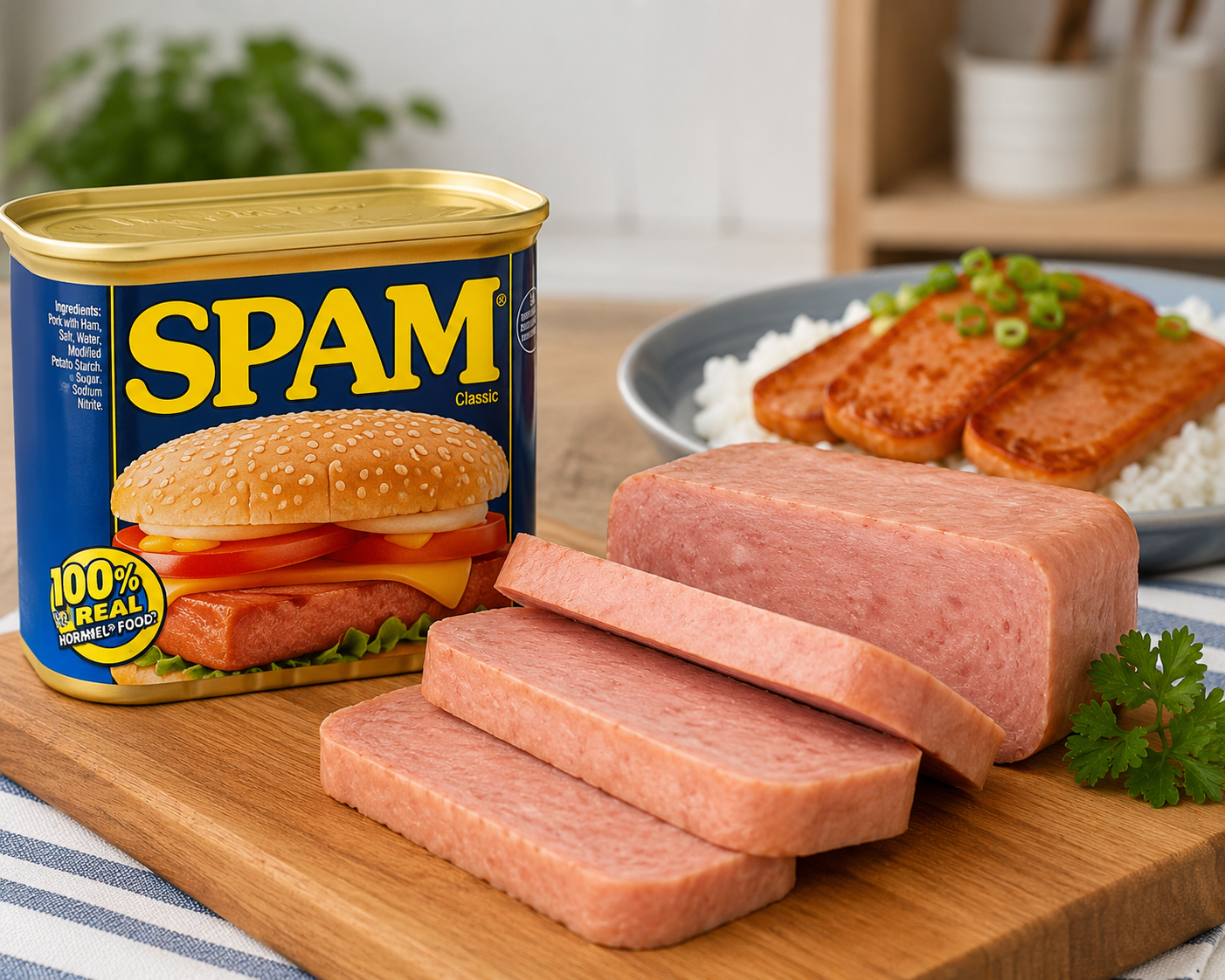
Few canned foods have achieved the lasting recognition of SPAM. Since its debut in 1937, the product has earned a place in kitchens around the world thanks to its convenience, long shelf life, and versatility. Originally introduced during a time when families valued affordable, shelf-stable foods, SPAM became especially well known during the years surrounding World War II, when reliable food supplies were an important part of daily life. Today, it remains a familiar ingredient for home cooks and a nostalgic favorite for many generations.
One of the most interesting aspects of SPAM is its name, which has inspired curiosity for decades. Over the years, several theories have circulated about its meaning, but the explanation most commonly associated with the brand is that it combines the words “spiced” and “ham.” According to the company’s historical accounts, the name was selected through a contest shortly before the product was introduced, giving the canned meat a memorable identity that has endured for generations.
The recipe itself is relatively simple. SPAM is made primarily from pork and ham, along with water, salt, potato starch, sugar, and sodium nitrite, which helps preserve quality and color. During manufacturing, the ingredients are blended, sealed into metal cans, cooked under carefully controlled conditions, and cooled before being packaged for distribution. This process contributes to the product’s long storage life while allowing it to be ready to eat or cook in a variety of recipes.
Over the decades, SPAM has evolved from a practical pantry essential into a recognizable part of food culture. Its affordability, convenience, and adaptability have helped it remain popular across different regions and cuisines. Whether sliced, grilled, fried, or added to traditional dishes, SPAM continues to demonstrate how a simple shelf-stable product can become a lasting symbol of culinary history and everyday convenience.