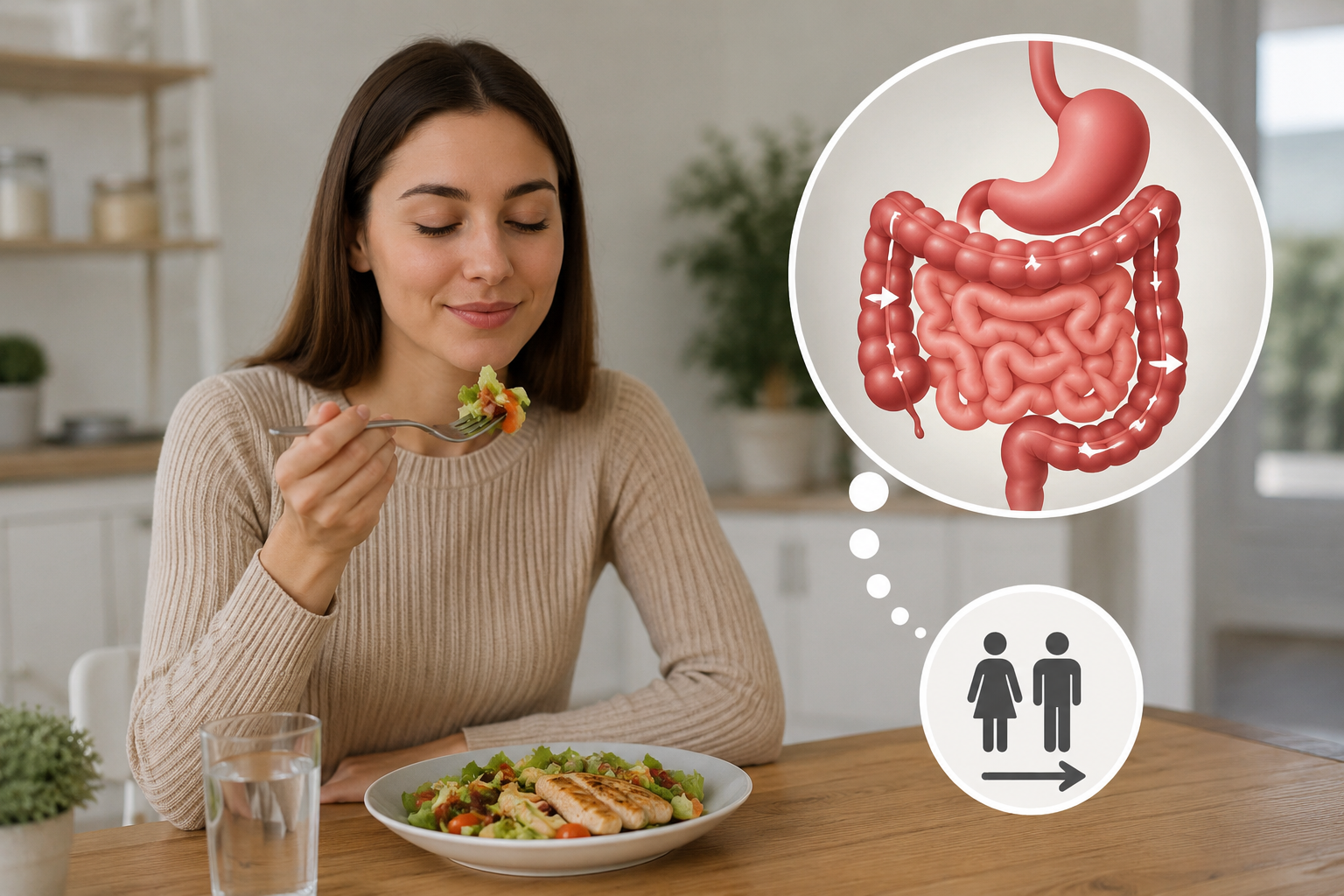
Have you ever finished a meal only to feel an almost immediate urge to use the restroom? Although it may seem like your food is passing through your digestive system unusually fast, that’s not actually what’s happening. In many cases, this is a completely normal digestive response that reflects the way the body naturally coordinates different parts of the gastrointestinal system.
As food enters the stomach, the stomach expands and sends signals through the nervous system that help prepare the digestive tract for the next stage of digestion. One of the body’s normal responses is the gastrocolic reflex, a process that encourages the colon to contract and move existing waste along. Because of this reflex, a bowel movement that occurs shortly after eating is typically made up of material from previous meals—not the food that was just consumed. The strength of this response varies from person to person, so some individuals notice it frequently while others rarely experience it.
Certain digestive conditions, including irritable bowel syndrome (IBS), can make the gastrocolic reflex feel stronger than usual. People with IBS may notice increased urgency, abdominal discomfort, or changes in bowel habits after meals. While these symptoms can interfere with daily routines, they are often manageable with appropriate medical guidance, individualized nutrition strategies, and healthy lifestyle habits tailored to each person’s needs.
Learning how the digestive system functions can make everyday experiences feel less confusing and more reassuring. Paying attention to eating patterns, staying well hydrated, consuming a balanced diet rich in fiber when appropriate, and discussing persistent or concerning symptoms with a qualified healthcare professional can all contribute to better digestive well-being. Understanding your body’s normal responses is an important step toward maintaining long-term digestive health.