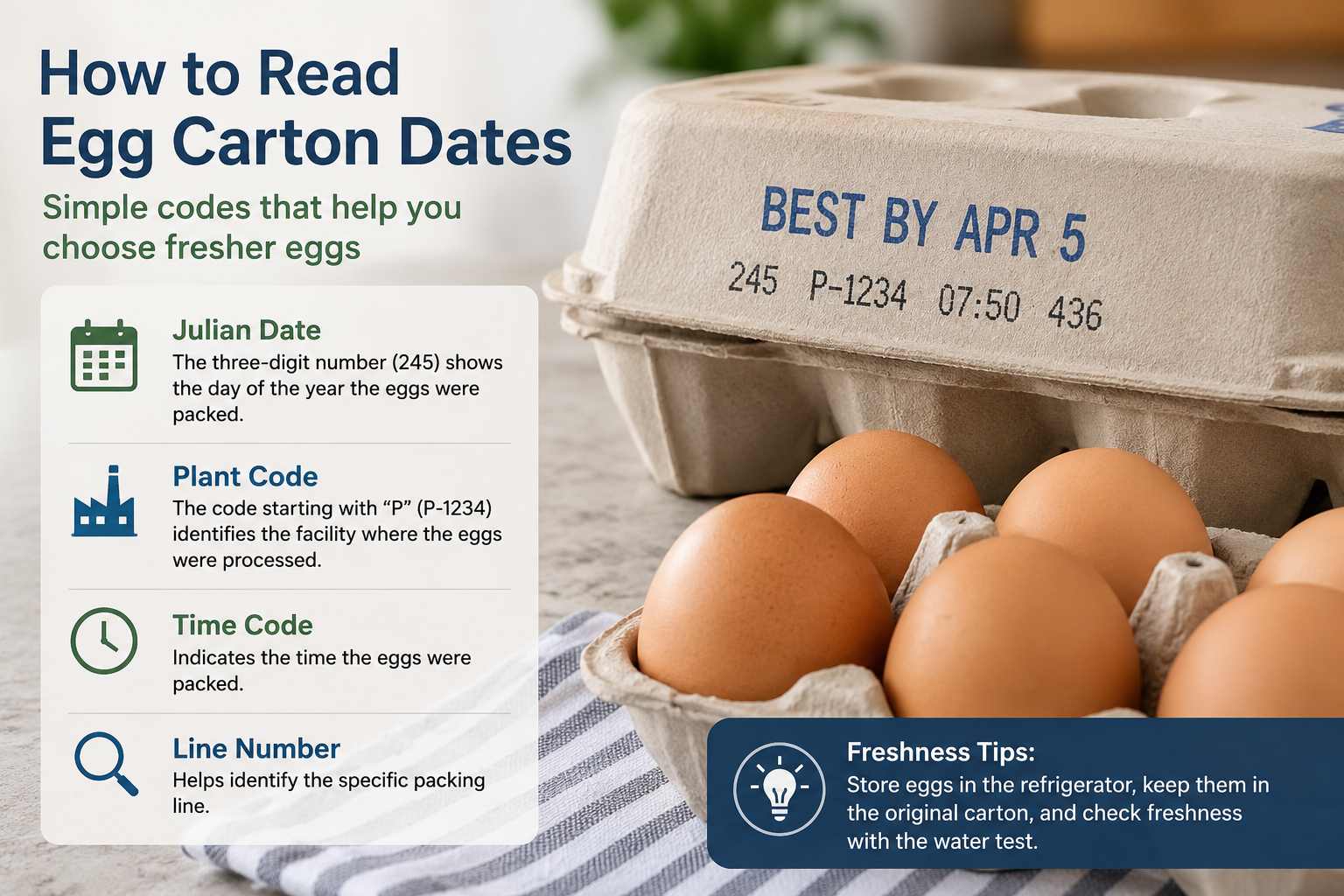
Many people notice the numbers and codes printed on egg cartons but are unsure what they actually mean. Alongside the familiar date on the package, you may also see a three-digit number and a plant identification code. These markings are not random—they provide helpful information about when the eggs were packed and where they were processed. Learning how to read them can make shopping easier and help you select a fresher carton with greater confidence.
One of the most useful markings is the Julian date, a three-digit number that represents the day of the year the eggs were packed. For example, 001 corresponds to January 1, while 365 represents December 31. Comparing this number on different cartons can give you a better idea of which eggs were packed more recently. You may also notice a plant code, typically beginning with the letter “P” followed by numbers, which identifies the facility where the eggs were graded, inspected, and packaged for distribution.
Proper storage is just as important as selecting a fresh carton. Food safety experts recommend keeping eggs in their original carton inside the refrigerator, where they are protected from moisture loss, strong food odors, and accidental damage. It’s also best to avoid washing eggs before storage, as the shell has a natural protective coating that helps reduce the chance of contaminants entering through tiny pores. Preserving this coating can help maintain freshness for a longer period.
Before using eggs, there are a few simple ways to evaluate their quality. A commonly used method is the water test: fresh eggs usually sink and lie flat, while older eggs may stand upright or float because the air pocket inside gradually grows over time. Cracking an egg into a separate bowl is another practical step, allowing you to check its appearance and smell before cooking. By understanding carton labels, storing eggs correctly, and performing these quick freshness checks, you can make informed choices and enjoy better results in everything from breakfast dishes to homemade baked goods.