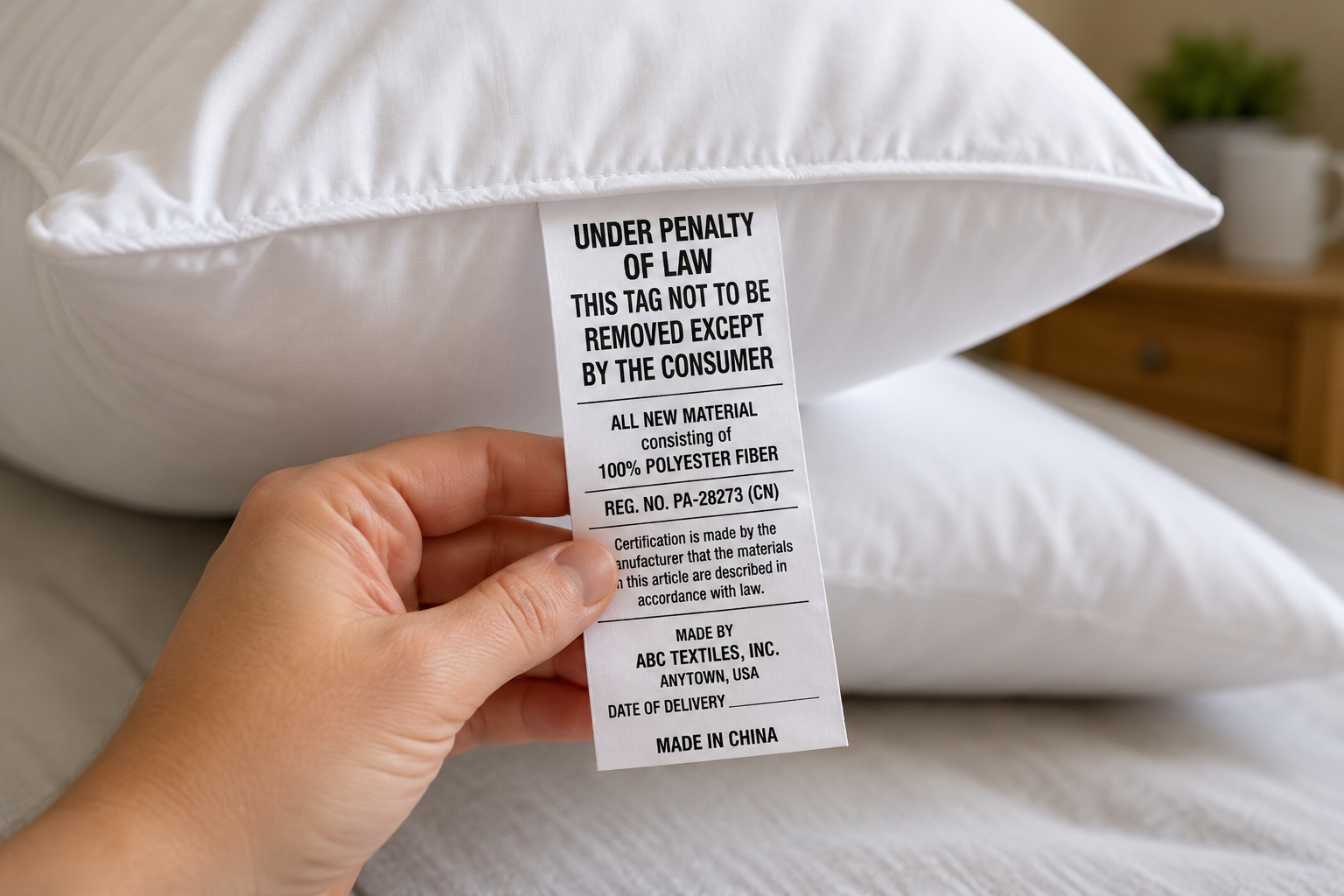
Many people have looked at the large label sewn into a pillow or mattress and wondered what the bold warning really means. The phrase “Do Not Remove Under Penalty of Law” can sound alarming, leading some to believe that cutting off the tag after purchase could result in legal consequences. In reality, the label has a practical purpose rooted in consumer protection rather than personal restrictions. Understanding its role can help clear up one of the most common misconceptions about household products.
The primary purpose of these tags is to provide accurate information about the materials used inside bedding products. They were introduced to ensure that manufacturers and retailers clearly disclose the contents of items such as pillows and mattresses before they are sold. This transparency helps buyers make informed decisions by identifying the filling materials, manufacturer details, and other important product information at the time of purchase.
Once a pillow or mattress has been legally purchased, the situation changes. In most cases, the original labeling requirements are directed at manufacturers and sellers—not the consumer who owns the product. Many people remove the tag because it feels uncomfortable, creates noise, or simply gets in the way. Others prefer to leave it attached since it often includes useful information such as care instructions, fabric composition, or manufacturer details that may be helpful later for cleaning, warranty questions, or product identification.
The next time you notice one of these familiar labels, you’ll know there’s more to the story than the warning suggests. Rather than being a restriction for everyday owners, the tag represents an effort to promote product transparency and informed purchasing. Whether you decide to keep it or remove it from an item you personally own is often a matter of convenience. Knowing the history behind this small piece of fabric turns a long-standing mystery into an interesting example of how consumer information and product labeling have evolved over time.