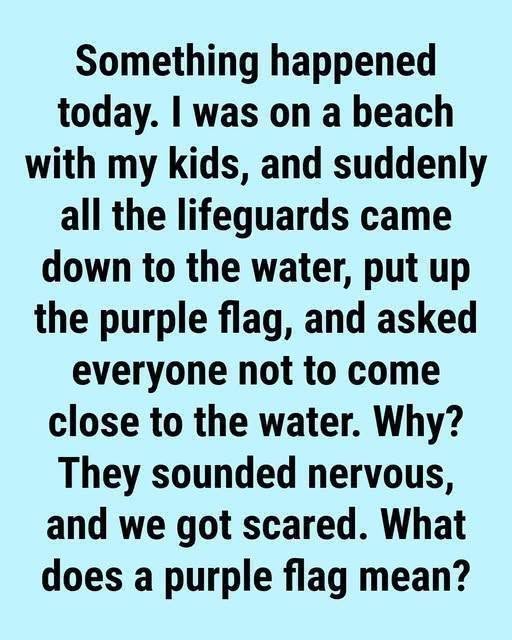
A day at the beach is one of the best ways to relax, enjoy the outdoors, and spend quality time with family and friends. Calm waves, warm sunshine, and fresh ocean air create the perfect setting for swimming, walking along the shore, or simply unwinding. However, the ocean is a constantly changing environment. Water conditions, weather, tides, currents, and marine life can shift throughout the day, which is why beaches use a flag warning system to help visitors stay informed. Among these warnings, the purple flag is one of the least understood, yet it provides valuable information that can help everyone enjoy a safer beach experience.
A purple beach flag is raised to alert visitors that potentially hazardous marine life has been spotted in or near the swimming area. This does not automatically mean the beach is closed or that swimming is prohibited. Instead, it encourages beachgoers to use extra caution because creatures such as jellyfish, Portuguese man o’ war, stingrays, sea lice, or other marine animals may be present. These animals are a natural part of the ocean ecosystem and rarely seek contact with people. Most incidents occur accidentally when swimmers unknowingly come too close. Paying attention to warning flags and listening to lifeguard instructions can greatly reduce the chance of an unpleasant encounter.
Understanding why marine life appears near the shoreline can also help visitors feel more confident. Ocean currents, tides, wind direction, and seasonal changes constantly move marine organisms from one location to another. A beach that appears completely clear in the morning may experience increased jellyfish activity later in the afternoon. Lifeguards regularly monitor these changing conditions and use the flag system to communicate important updates. If a purple flag is flying, simple precautions—such as avoiding visible marine animals, supervising children closely, shuffling your feet while walking in shallow water where stingrays may rest, and asking lifeguards about current conditions—can help you continue enjoying your visit safely.
The purpose of a purple flag is not to create fear but to promote awareness and responsible decision-making. Beach safety depends on understanding the environment and respecting the wildlife that naturally inhabits coastal waters. By paying attention to warning flags, following posted advisories, and respecting guidance from lifeguards, visitors can reduce risks while continuing to enjoy swimming, exploring, and relaxing by the sea. A little knowledge goes a long way, and recognizing the meaning of a purple flag is one of the simplest ways to make every beach trip both enjoyable and safe.