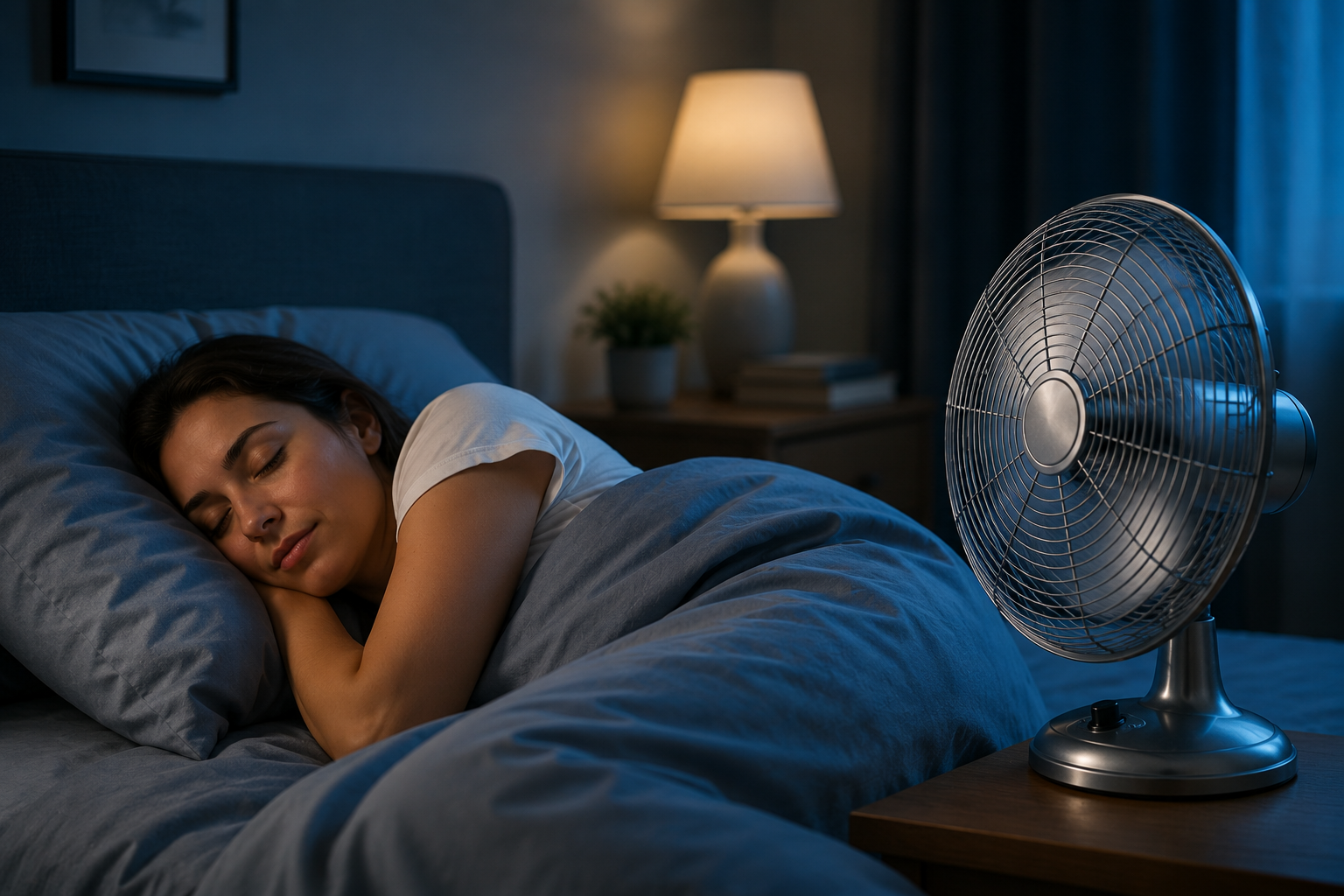
Many people rely on a fan to stay cool and comfortable while sleeping, especially during warmer months. The gentle airflow and steady background sound can create a relaxing environment that makes it easier to fall asleep. For most healthy adults, using a fan overnight is considered safe. However, understanding both the advantages and potential drawbacks can help you create a bedroom environment that supports better rest and overall well-being.
One of the biggest benefits of sleeping with a fan is improved air circulation. A cooler room may help the body maintain a comfortable temperature, which can contribute to more restful sleep. In addition, the consistent “white noise” produced by a fan can mask sounds from traffic, neighbors, or other household activities, making it easier to stay asleep. These simple benefits have made fans a popular sleep aid in many homes.
Despite these advantages, continuous airflow may not be ideal for everyone. If a fan blows directly toward your face or body for several hours, some people may experience dry eyes, nasal irritation, or a sore throat upon waking. Dust can also collect on fan blades over time, and if the fan is not cleaned regularly, those particles may circulate throughout the room. Keeping the fan clean, directing airflow away from the bed, and maintaining moderate room humidity can help minimize these concerns while preserving comfort.
Ultimately, the best sleeping environment depends on your individual needs and preferences. A clean fan, comfortable bedroom temperature, and good indoor air quality can all contribute to healthier sleep habits. If you regularly experience breathing difficulties, severe allergies, or ongoing sleep problems, it is advisable to speak with a qualified healthcare professional to identify the most appropriate solutions. By making a few simple adjustments, you can enjoy the cooling benefits of a fan while supporting a restful and refreshing night’s sleep.