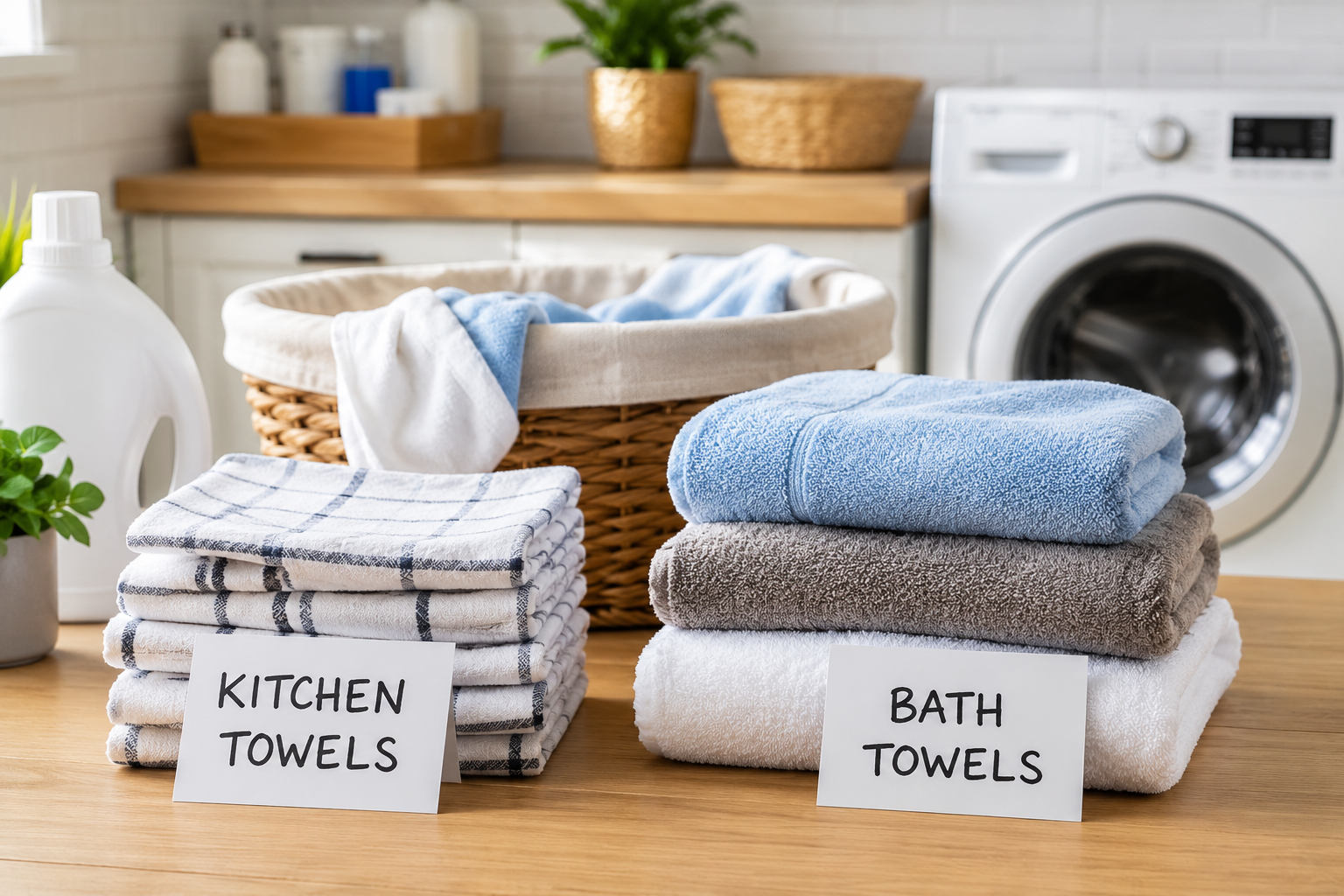
Keeping towels fresh and hygienic involves more than simply placing them in the washing machine. Although bath towels and kitchen towels may look similar, they are used for different purposes and can collect different types of residue throughout the day. Understanding when they can be washed together—and when they should be separated—can help maintain better household cleanliness while extending the life of your linens.
The first step is to sort towels according to how they have been used. Kitchen towels that have only dried clean hands, dishes, or countertops can often be washed with bath towels using an appropriate amount of detergent and a warm or hot water cycle, following the care instructions on the fabric label. However, towels used to clean up food spills, grease, or surfaces that came into contact with raw meat should be washed separately. This simple habit helps reduce the possibility of transferring food-related residue to other laundry.
Proper drying is just as important as proper washing. Damp towels can develop unpleasant odors if they are left in the washing machine or fail to dry completely. To help keep towels fresh, remove them promptly after the wash cycle and dry them thoroughly using a clothes dryer or by hanging them in a well-ventilated area. If a towel continues to smell musty even after washing, it may be time to replace it with a new one.
Rather than creating complicated laundry rules, focus on a consistent routine that supports cleanliness and fabric care. Separate heavily soiled kitchen towels when necessary, avoid overloading the washing machine, use the correct amount of detergent, and ensure every towel dries completely before storing it. These practical habits can help maintain cleaner towels, improve household hygiene, and keep your linens soft, fresh, and ready for everyday use.