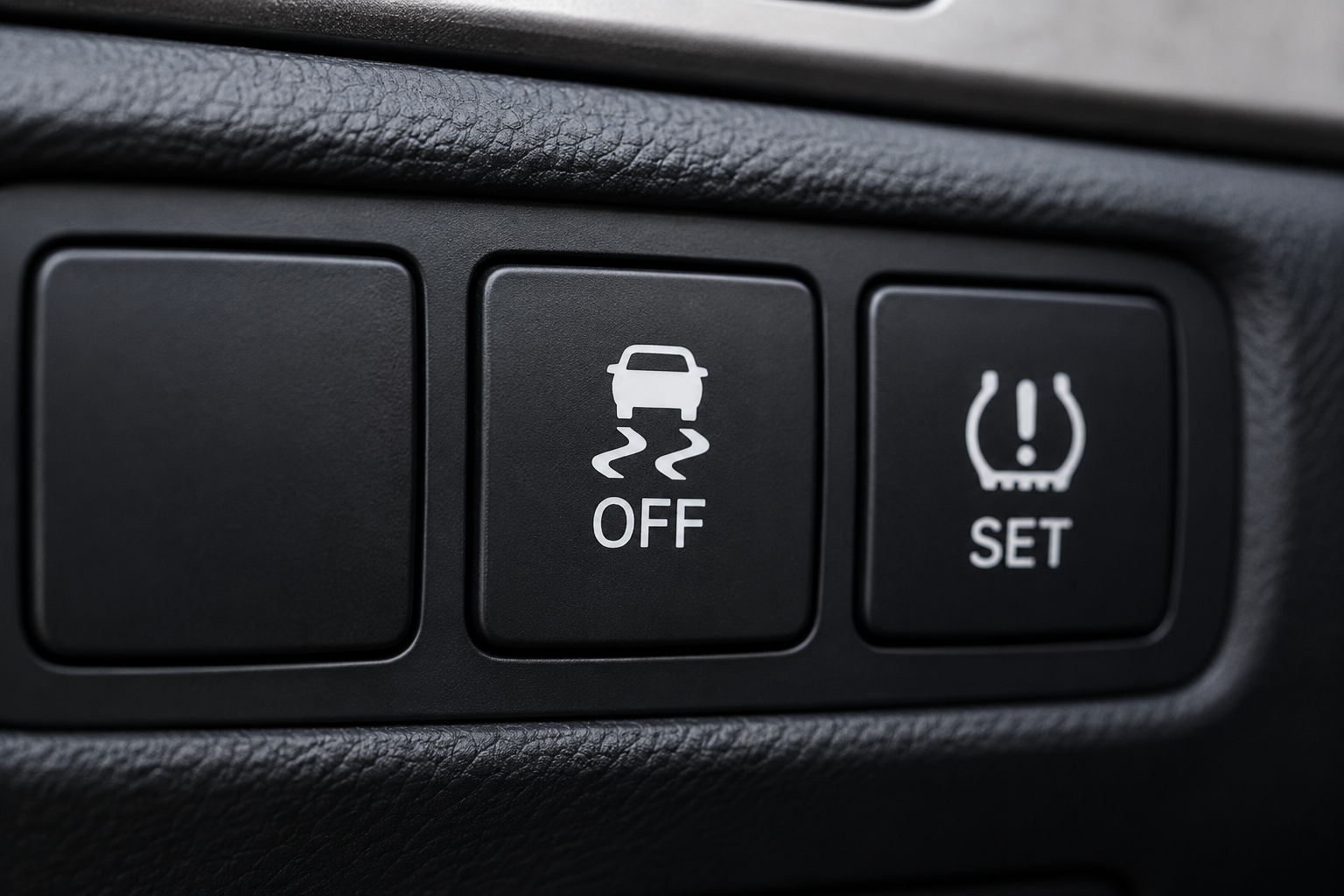
Modern vehicles include a variety of safety technologies that work quietly in the background, often without drivers noticing them. One of the most valuable features is the traction control and electronic stability control system, commonly identified by an icon showing a car with wavy skid marks. While many motorists see this symbol every day, few fully understand how the system functions or the important role it can play during challenging driving conditions. Learning about this feature can help drivers make more informed decisions and improve overall road safety.
Traction control is designed to help maintain grip when one or more wheels begin to lose traction. By automatically adjusting engine power and, in some cases, applying braking force to individual wheels, the system helps improve vehicle stability on slippery surfaces such as wet roads, snow, ice, loose gravel, or sand. Electronic stability control goes a step further by assisting the driver if the vehicle begins to skid during a turn or sudden maneuver. These technologies are intended to support the driver, although they cannot overcome the laws of physics or replace careful driving.
For everyday travel, manufacturers generally recommend leaving the traction control and stability control systems activated. They are designed to respond automatically when additional stability is needed and can provide valuable assistance in changing road conditions. There are limited situations in which temporarily switching traction control off may be helpful, such as when a vehicle becomes stuck in deep snow, mud, or loose sand and controlled wheel spin is needed to regain movement. Once the vehicle is free, turning the system back on is typically the recommended practice before continuing the journey.
Understanding your vehicle’s safety features is an important part of responsible driving. Reading the owner’s manual, recognizing dashboard symbols, and becoming familiar with how electronic driver-assistance systems operate can increase confidence behind the wheel. Although no technology can prevent every accident, combining these built-in safety features with attentive driving, appropriate speed, and proper vehicle maintenance offers the best approach to staying safe in a wide range of road and weather conditions.