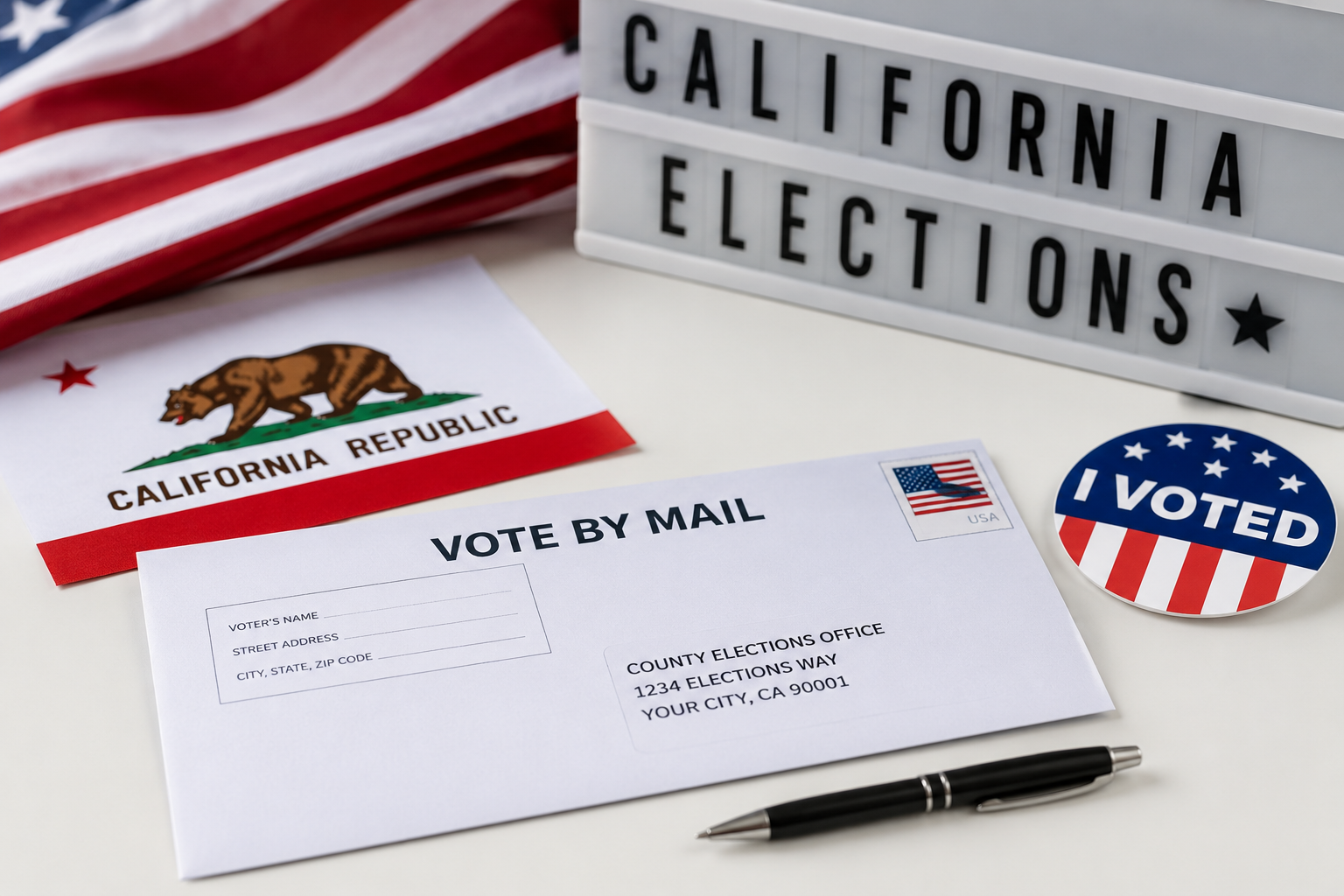
California’s election system remains a frequent topic of public discussion as policymakers, election officials, and voters continue examining how ballots are collected, verified, and counted. Recent remarks from President Donald Trump once again brought attention to the state’s voting procedures, particularly its widespread use of mail-in voting and the time required to complete official election results. The debate reflects broader national conversations about election administration and the balance between accuracy, transparency, and efficiency.
One of the defining features of California’s system is its extensive vote-by-mail program, which allows eligible voters to return ballots through the mail or at authorized drop-off locations. Under state law, ballots that meet legal requirements, including proper postmarks and eligibility standards, may continue to be accepted after Election Day within established deadlines. Election officials emphasize that each ballot undergoes multiple verification steps, including signature matching and voter record checks, before it becomes part of the certified count. These procedures are intended to ensure that every valid vote is processed according to state election laws.
Public opinion remains divided over the pace of the counting process. Supporters argue that taking additional time to verify ballots strengthens election accuracy and helps ensure that every eligible voter has their ballot counted. Others believe that extended counting periods can delay final results and create uncertainty, particularly in closely contested races. While perspectives differ, many observers agree that election systems should strive to provide both reliable outcomes and timely public reporting.
As election policies continue to evolve, discussions about voting procedures are expected to remain an important part of public policy. Lawmakers, election administrators, and community leaders continue exploring ways to improve transparency, voter access, and operational efficiency while preserving confidence in the electoral process. Regardless of differing viewpoints, the shared objective remains conducting elections that are secure, accurate, and trusted by the public.