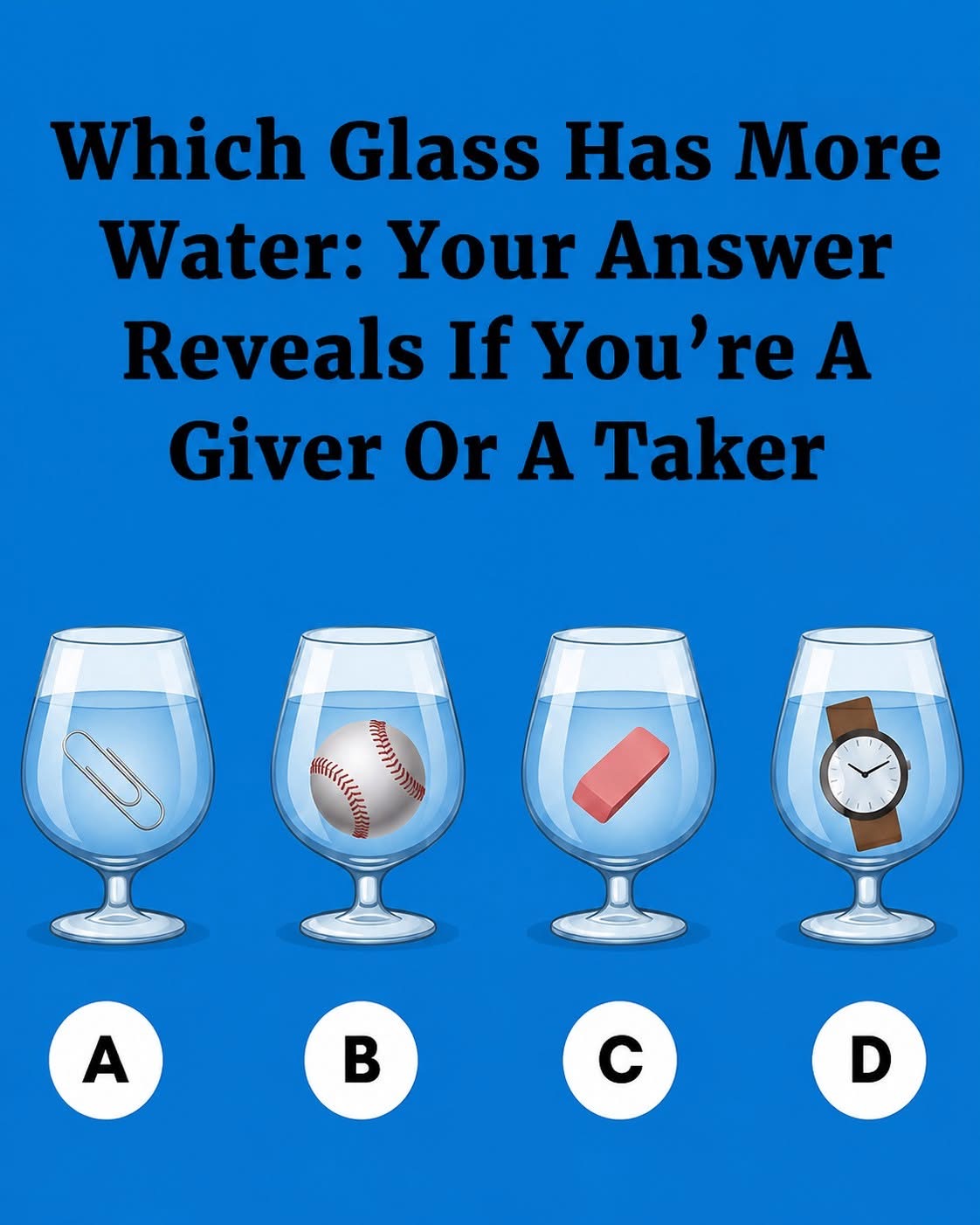
At first glance, four identical glasses labeled A, B, C, and D seem to hold the same amount of water. Each one appears evenly filled, creating the impression that nothing sets them apart. However, a closer look reveals a small twist: each glass contains a different object—a paperclip, a baseball, an eraser, and a wristwatch. The challenge is straightforward yet engaging: determine which glass actually holds the most water.
The first step is to think about how objects interact with liquids. When an item is placed in water, it occupies space and pushes the liquid upward. This means the visible water level does not represent the true volume of water alone. Instead, part of that level is influenced by the size of the object inside the glass. The larger the object, the more water it displaces.
Next, apply this reasoning to the four glasses. The baseball takes up the most space, so that glass contains less actual water despite appearing full. The eraser and wristwatch fall somewhere in the middle, each displacing a moderate amount. The smallest item—the paperclip—displaces the least, which means that glass holds the greatest volume of water even though all four look similar at first glance.
Finally, this puzzle offers more than a scientific explanation. It highlights how easily perception can be influenced by surface details. By slowing down and examining what is not immediately obvious, clearer conclusions can be reached. Whether solving puzzles or making everyday decisions, careful observation often leads to more accurate understanding and better outcomes.