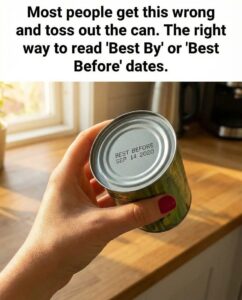
It’s easy to glance at a date stamped on a can and assume it marks the point when food should no longer be used. In reality, these dates often serve as guidelines for quality rather than strict safety limits. Learning how to interpret them can help you avoid unnecessary waste while managing your pantry with more confidence and clarity.
Start by understanding the wording on the label. Phrases like “Best By” or “Best Before” refer to the period when the product is expected to maintain its best flavor, texture, and overall quality. They are not expiration dates in the strict sense. Most canned foods are designed to be shelf-stable, meaning they can remain usable well beyond the printed date when stored correctly. Keeping cans in a cool, dry place—away from heat and direct sunlight—is one of the simplest ways to preserve their condition.
Next, consider the type of food inside the can. Items with higher acidity, such as tomatoes or fruit-based products, may show changes in taste or texture sooner than low-acid foods like beans, vegetables, or meats. However, these changes are usually gradual and related to quality rather than safety. Observing the product carefully and using reasonable judgment allows you to decide whether it still meets your standards for use.
Before opening any can, take a moment to inspect it. Avoid using cans that are bulging, leaking, heavily rusted, or damaged near the seams. Once opened, check the contents for any unusual smell or appearance. By combining label awareness with simple visual checks, you can make informed decisions, reduce waste, and keep your kitchen organized in a safe and practical way.