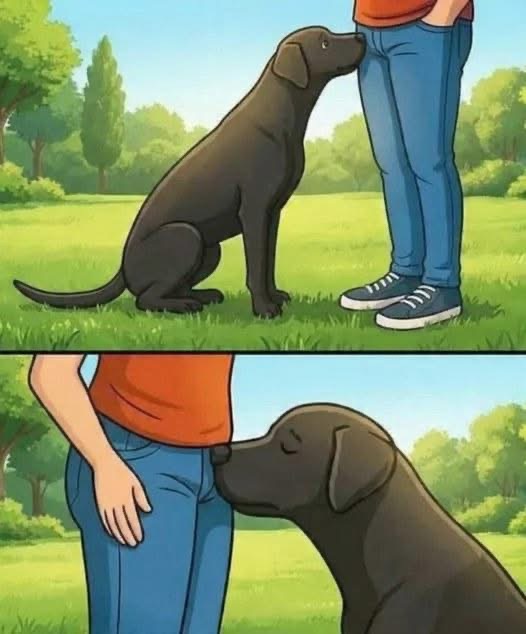
Dogs interpret the world primarily through scent, using their noses to collect detailed information that humans typically rely on sight or conversation to obtain. During greetings, this can lead to behaviors that may feel unusual from a human perspective, such as close sniffing. However, for dogs, this is a normal and efficient way to identify individuals and understand their surroundings.
A helpful way to view this behavior is as a form of communication. The human body naturally carries unique scent markers, and dogs can quickly detect differences that signal identity and emotional state. When a dog approaches closely, it is not acting out of disrespect but rather following instinct. From the dog’s point of view, this is similar to how people use facial expressions or voice tone to interpret a situation.
If this behavior feels uncomfortable in social settings, it can be managed with clear guidance. Start by reinforcing calm greetings through simple commands such as “sit” or “stay.” Practicing these cues consistently—especially before interactions with guests—helps redirect the dog’s focus and creates a more controlled environment. Positive reinforcement, such as treats or praise, encourages the desired response over time.
With patience and routine, dogs can learn alternative ways to greet people while still feeling secure. This balanced approach respects natural instincts while setting appropriate boundaries. In the long run, it strengthens communication between pets and owners, making everyday interactions more comfortable for everyone involved.