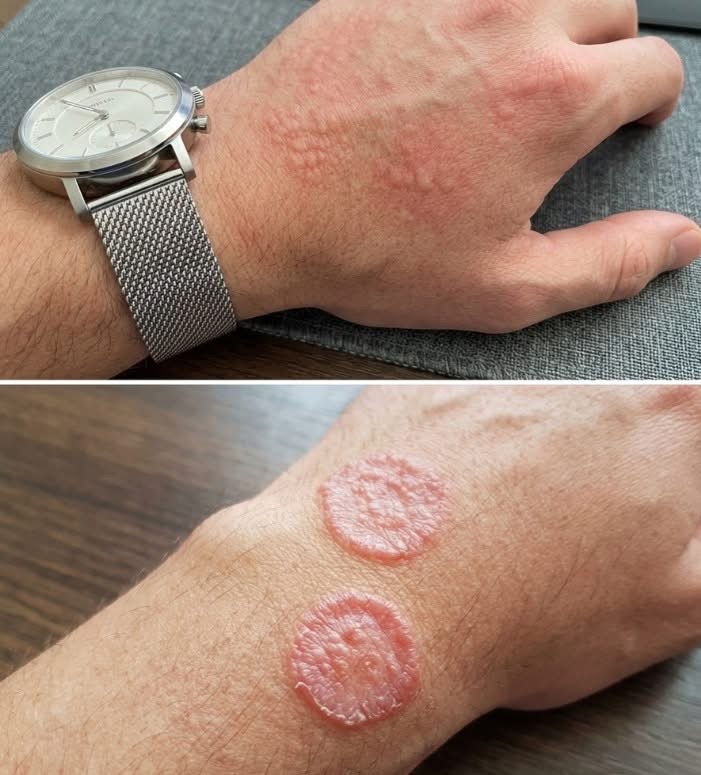
Minor skin changes—like redness or itching—are common and often fade without treatment. Because they’re visible and familiar, it’s easy to dismiss them as routine. Still, the skin can also reflect what’s happening elsewhere in the body, especially when a rash appears alongside other symptoms.
A frequent example is urticaria (hives), which shows up as raised, itchy welts that can come and go quickly. Triggers may include foods, environmental factors, or stress. On their own, hives are usually mild and short-lived. Paying attention to patterns—how often they occur and what accompanies them—can provide useful context.
The situation changes when skin symptoms appear together with breathing or circulation issues. Signs such as shortness of breath, wheezing, chest tightness, or swelling around the throat or lips can point to a severe allergic response known as anaphylaxis. This type of reaction can progress rapidly and may involve multiple body systems at once.
If these combined symptoms occur, treat the situation as urgent and seek immediate medical care. The key takeaway is straightforward: isolated skin reactions are often manageable, but when they are paired with respiratory or systemic symptoms, prompt evaluation is essential. Staying aware of these differences can help you respond quickly and appropriately.