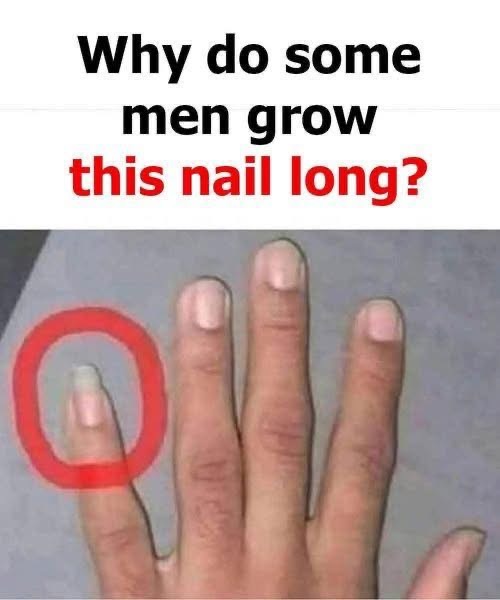
At first glance, a single long pinky nail can seem unusual, especially when the rest of the nails are neatly trimmed. Yet this small detail has appeared across different cultures and time periods, often carrying meanings that go beyond simple appearance. In many cases, it reflects personal choice shaped by tradition, habit, or individual style rather than a single universal explanation.
Historically, in parts of Asia, the Middle East, and Latin America, a longer pinky nail has sometimes been associated with social status. It could signal that a person was not engaged in manual labor, subtly indicating a different lifestyle or profession. For some individuals today, maintaining this detail can still represent a quiet connection to cultural heritage or long-standing customs.
In more practical terms, some people keep the nail slightly longer for everyday convenience. It can be used for small tasks such as opening packaging, handling delicate objects, or even assisting with certain artistic or musical techniques. In these cases, the choice is purely functional and unrelated to symbolism, reflecting simple personal preference.
At the same time, interpretations can vary widely, and assumptions are not always accurate. What may appear unusual to one person can hold a completely different meaning for another. Ultimately, the long pinky nail is a reminder that small personal details often carry diverse stories—shaped by culture, habit, and individuality—making it more meaningful to understand context rather than rely on quick conclusions.