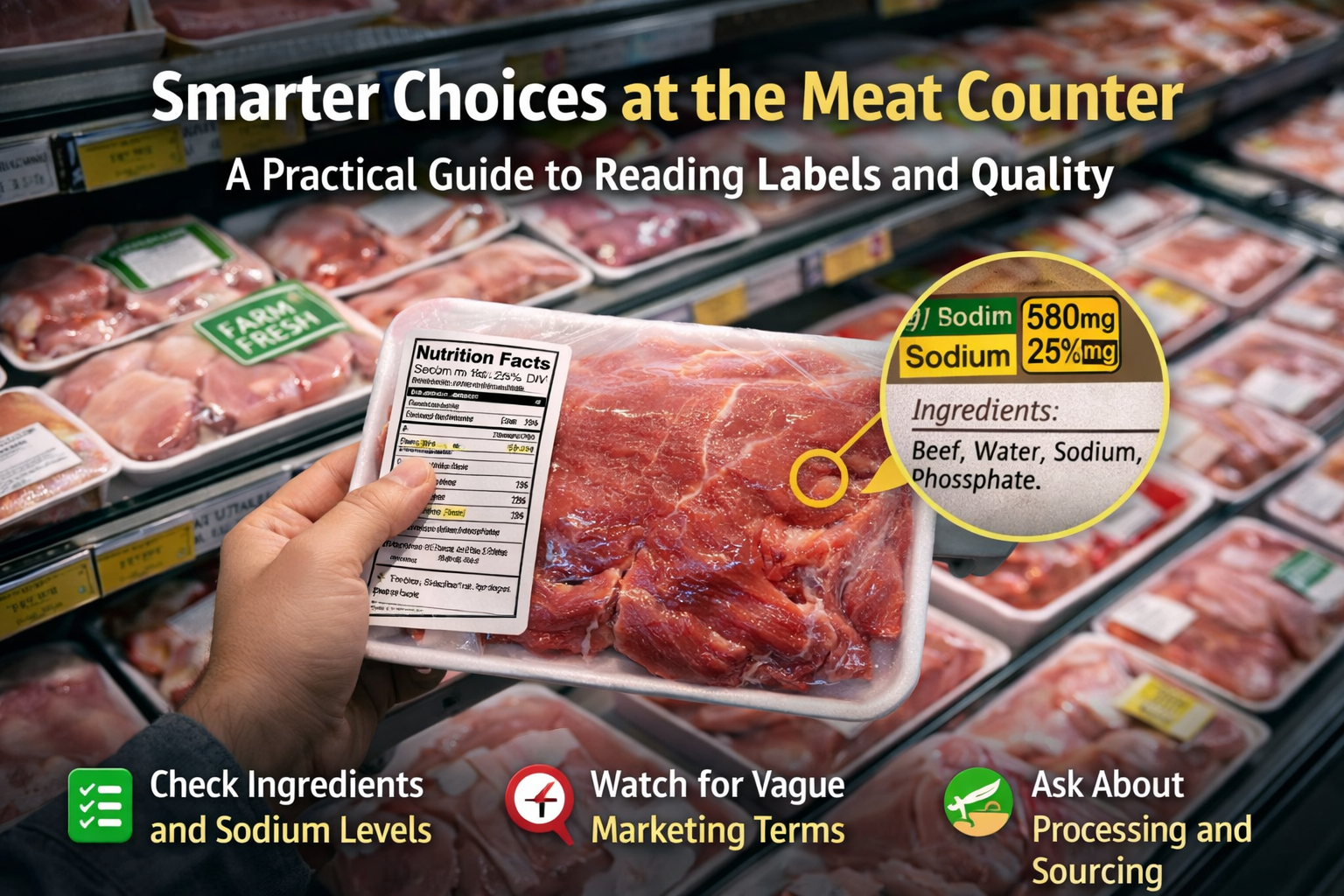
The meat section can feel straightforward, but it’s worth taking a closer look before you choose. Packaging is designed to catch your eye, and presentation can make products appear more uniform than they really are. The first step is to slow down and compare options—look beyond color and price to understand what you’re actually buying.
Some products—especially processed items like sausages, deli slices, or pre-seasoned cuts—may include added ingredients such as water, sodium, or binders to improve texture and shelf life. These additions are permitted, but they’re not always obvious at a glance. Checking the ingredient list and nutrition panel on meat products helps you see the full picture, including any extras that affect flavor and overall composition.
Front-of-package terms can also be vague. Phrases like “natural,” “premium,” or “farm fresh” aren’t always standardized indicators of quality. Instead, focus on clearer details: ingredient lists, sodium levels, and whether the product is minimally processed. When possible, choose simple cuts with fewer added components, and consider asking a store associate or local butcher about sourcing and handling.
Small habits make a difference. Compare labels, choose options with shorter ingredient lists, and store meat properly at home to maintain freshness. By combining label awareness with a few practical checks, you can make confident decisions and select products that align with your preferences for quality and simplicity.