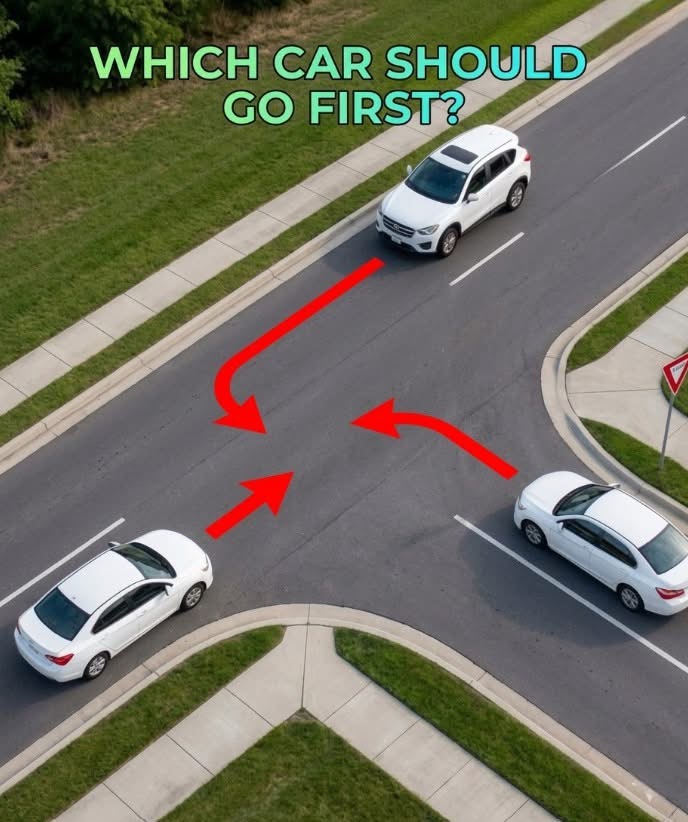
At first glance, an intersection without traffic lights may seem simple to manage, but it often requires careful observation and thoughtful decision-making. When multiple vehicles approach at the same time, the situation becomes less obvious and demands attention to detail. These moments highlight how even familiar driving rules can feel uncertain when applied in real-life conditions, making awareness and patience essential.
In the absence of traffic signals, one of the most important guidelines is the right-of-way rule. In many regions, drivers are expected to yield to vehicles approaching from their right. While this principle is straightforward in theory, it can lead to hesitation when several drivers reach the intersection simultaneously. Each driver may pause, waiting for others to proceed, which can momentarily disrupt the natural flow of traffic.
Successfully handling these scenarios requires more than just knowing the rules—it involves applying them with clarity and confidence. Road signs, such as yield signs, can significantly influence who moves first, so paying close attention to the surroundings is crucial. Observing vehicle positions, movement patterns, and any posted signs helps drivers make safer and more informed decisions.
Ultimately, safe driving is built on a combination of knowledge, awareness, and sound judgment. It is not only about following rules, but also about understanding how to apply them appropriately in different situations. Intersections without signals serve as a valuable reminder that attentive and responsible driving plays a key role in maintaining both safety and efficiency on the road.