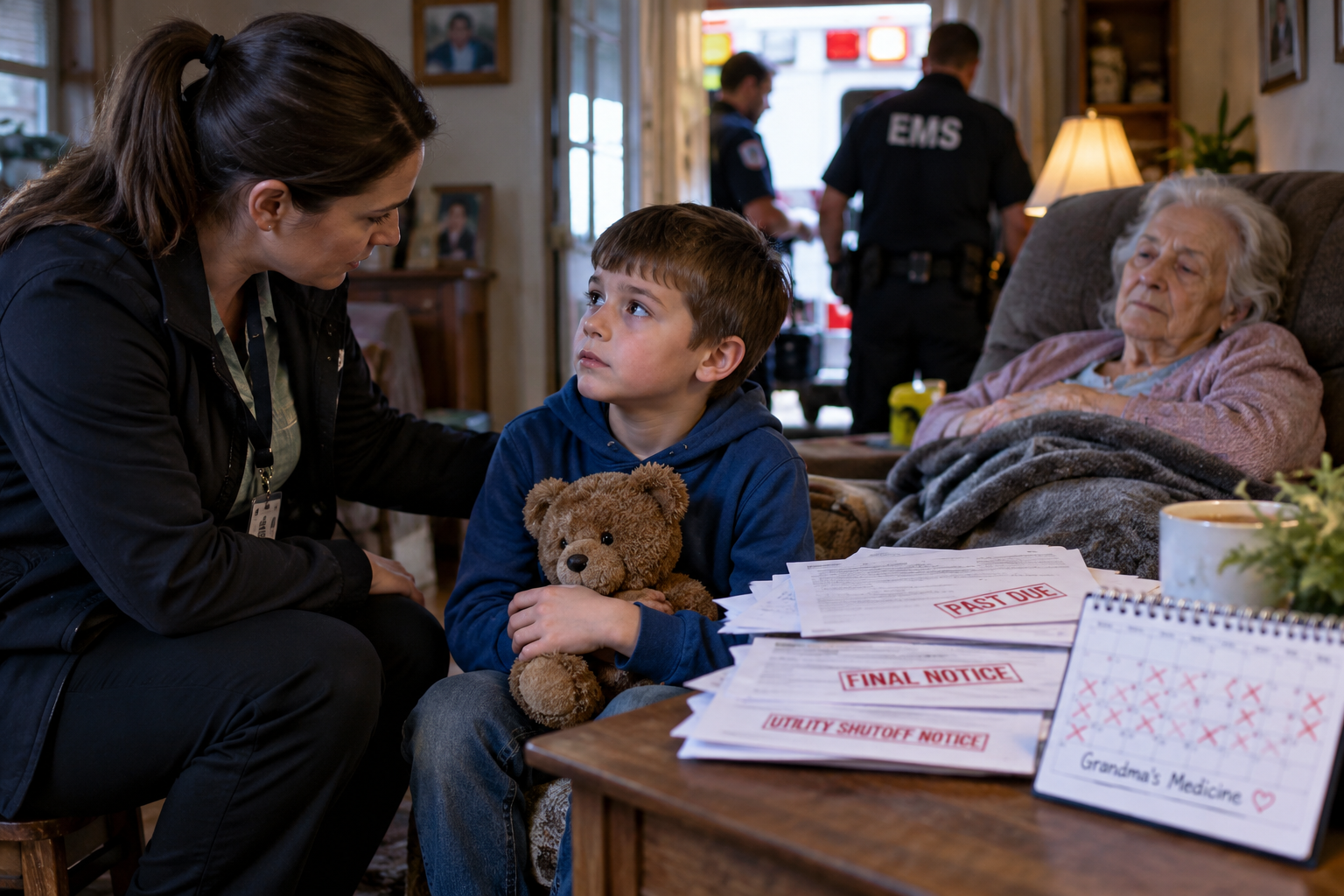
Recognizing when a family needs additional support often begins with paying attention to small details that are easy to overlook. When a trained professional entered the home of seven-year-old Oliver, several warning signs immediately stood out: the rooms were unusually cold and dark, household responsibilities appeared to have fallen behind, and Oliver’s elderly grandmother seemed unable to manage her normal routine independently. The child explained that she had recently become increasingly confused, occasionally lost her balance, and sometimes struggled to stay alert. Most concerning was his explanation that he had largely been trying to look after her himself while other adults remained unaware of how serious the situation had become.
Understanding the full situation required listening carefully rather than dismissing Oliver’s concerns as childhood anxiety. In a hallway closet were unopened letters, overdue utility notices, and a calendar on which Oliver had marked the days he believed his grandmother needed her medication. At only seven years old, he had attempted to manage responsibilities that should never have rested on a child. Instead of expecting him to continue handling the situation, the professional contacted emergency medical services so qualified adults could evaluate his grandmother and determine what assistance she required. The assessment indicated that she needed prompt medical attention, including help addressing dehydration and problems with medication management.
Creating a safer long-term arrangement involved more than resolving the immediate health concern. After receiving hospital care, Oliver’s grandmother was connected with appropriate daily assistance and nursing support, while social-service professionals became involved to consider the well-being of everyone in the household. Oliver’s father, who had been working away from home and had believed things were being managed, reorganized his responsibilities so he could be more present. An aunt began visiting regularly, and Oliver’s teacher gained a better understanding of why he had seemed anxious at school. With several adults finally communicating and sharing responsibility, the family developed a stronger support system instead of relying on one person—especially a child—to manage everything.
Helping Oliver recover emotionally was equally important. He needed reassurance that speaking up had been the right decision and that caring about his grandmother did not make him responsible for solving adult problems. As the months passed and dependable support remained in place, he gradually returned to ordinary childhood routines without constantly worrying about what might happen at home. His experience offers a useful reminder for parents, relatives, educators, and caregivers: when a child repeatedly says that something feels wrong, listen carefully, ask appropriate questions, and involve qualified help when necessary. Sometimes the most meaningful first step toward protecting a family is simply taking a child’s concerns seriously.