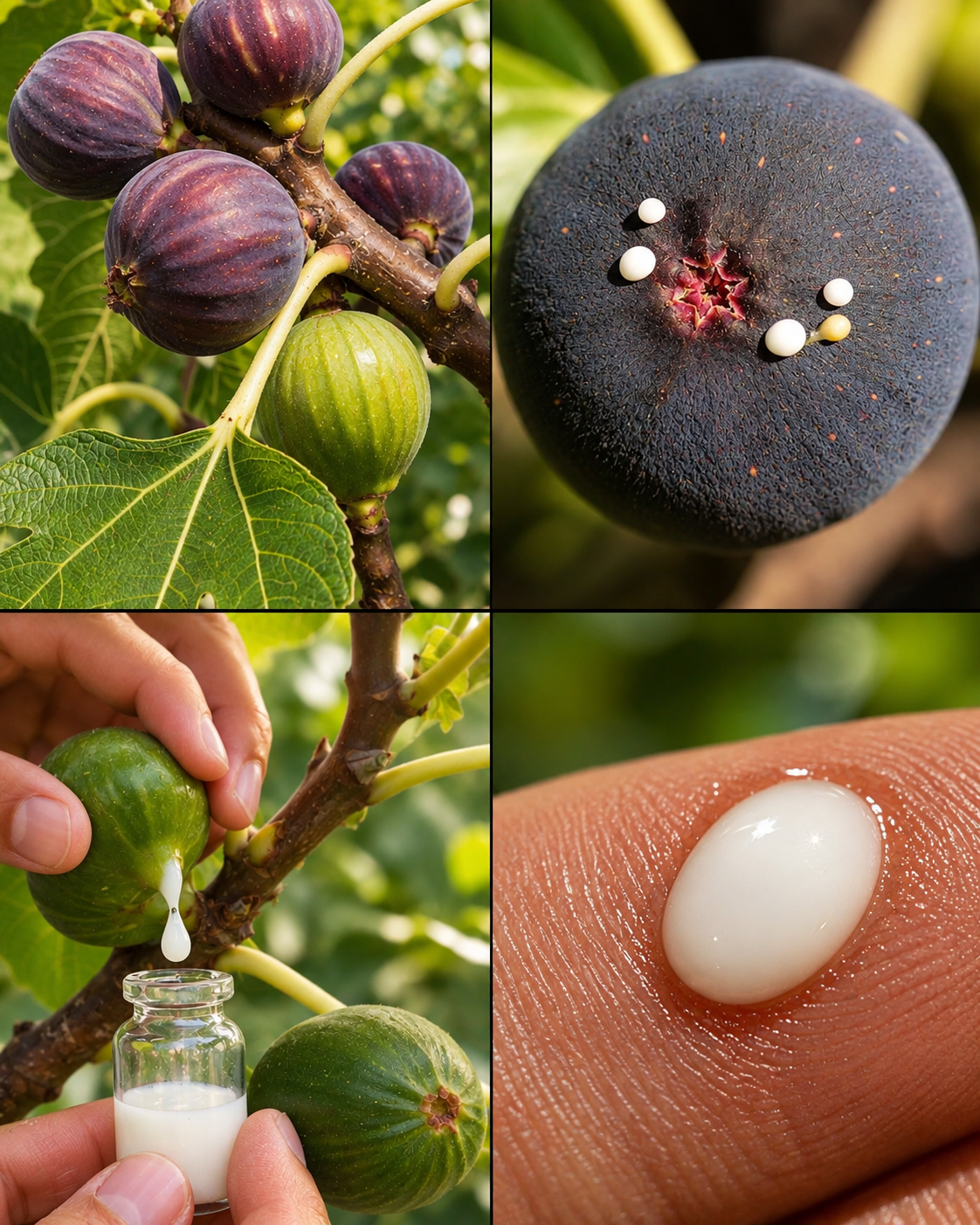
For generations, people have turned to natural ingredients to support everyday skin care, and fig sap is one of the lesser-known remedies that continues to attract interest. Also called fig latex or fig milk, this white, milky liquid is released from the stems, leaves, and unripe fruit of the common fig tree (Ficus carica) when the plant is cut. It contains naturally occurring enzymes and plant compounds that have been traditionally used in home remedies. While many people value it for cosmetic and skincare purposes, scientific evidence remains limited for several traditional claims, making careful use especially important. If you decide to try fig sap, always begin with a small patch test and discontinue use immediately if irritation develops.
One of the most common traditional uses of fig sap is for localized skin concerns such as rough patches, calluses, or warts. Some people also include it in homemade skin-care routines designed to gently exfoliate the skin or improve the appearance of uneven texture. A simple way to use it is to collect a small drop of fresh sap while wearing gloves, then apply it only to the specific area you wish to treat, avoiding healthy surrounding skin. Leave it on for a limited period before washing the area with lukewarm water. Because the sap can be irritating, it should never be applied near the eyes, on broken skin, or over large areas of the body. If you have sensitive skin or a history of allergies, consult a healthcare professional before experimenting with natural latex-containing products.
Some homemade beauty recipes combine tiny amounts of fresh fig sap with gentle ingredients such as honey or rose water. Honey is commonly used as a moisturizing base, while rose water is popular for refreshing the skin. These mixtures are traditionally applied for a short time and then rinsed away thoroughly. Although many people enjoy natural skin-care routines, it is important to remember that results vary from person to person, and no homemade preparation can guarantee the treatment of acne, dark spots, or other skin conditions. Persistent or worsening skin concerns should always be evaluated by a qualified dermatologist rather than relying solely on home remedies.
If you have access to a healthy fig tree, collect the sap carefully by making a small cut on a leaf or stem while wearing protective gloves, then gather only the amount you need because the liquid begins to oxidize quickly. Store it only briefly, as fresh sap is generally preferred for traditional applications. Avoid swallowing large quantities, keep it away from children and pets, and do not use it during pregnancy or breastfeeding unless advised by a healthcare professional. Used responsibly and with realistic expectations, fig sap can be an interesting addition to a natural self-care routine, but it should complement—not replace—professional medical advice or evidence-based treatment when health concerns arise.