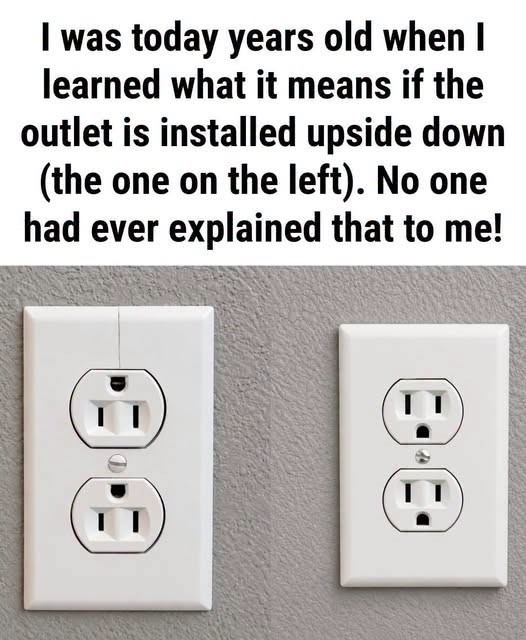
At first glance, an electrical outlet with the grounding slot positioned at the top may seem like an installation mistake. However, in many homes, this orientation is completely intentional. Electricians sometimes mount outlets this way to identify a specific wiring setup or to match a particular installation preference. While it may look unusual, an upside-down outlet often reflects a practical decision rather than an error, making it a small but interesting detail of residential electrical design.
One common reason dates back to older homes, where switched wall outlets were widely used before ceiling lights became standard in every room. Instead of relying on overhead lighting, homeowners plugged table or floor lamps into designated outlets that could be turned on and off with a nearby wall switch. In some cases, installing the outlet upside down provided a convenient visual cue that it functioned differently from the other receptacles in the room. Frequently, only one socket was connected to the switch, while the other remained continuously powered for everyday devices that needed constant electricity.
It’s important to know that outlet orientation is not governed by a universal residential rule. Electrical codes generally allow outlets to be installed in either direction, provided the wiring meets safety requirements. Because of this flexibility, electricians, builders, and homeowners may choose the orientation based on local practices, project specifications, or personal preference. In commercial buildings, some installations also place the grounding slot on top for practical reasons, but this does not automatically indicate the same purpose in every location.
If you want to determine whether an outlet is controlled by a wall switch, the safest and simplest method is to plug in a small lamp or another low-power device and test the nearby switches. This quick check can reveal how the outlet operates without relying on its appearance alone. Understanding the reasons behind different outlet orientations can help you better recognize the features of your home’s electrical system and appreciate that what seems unusual is often an intentional part of the original design.