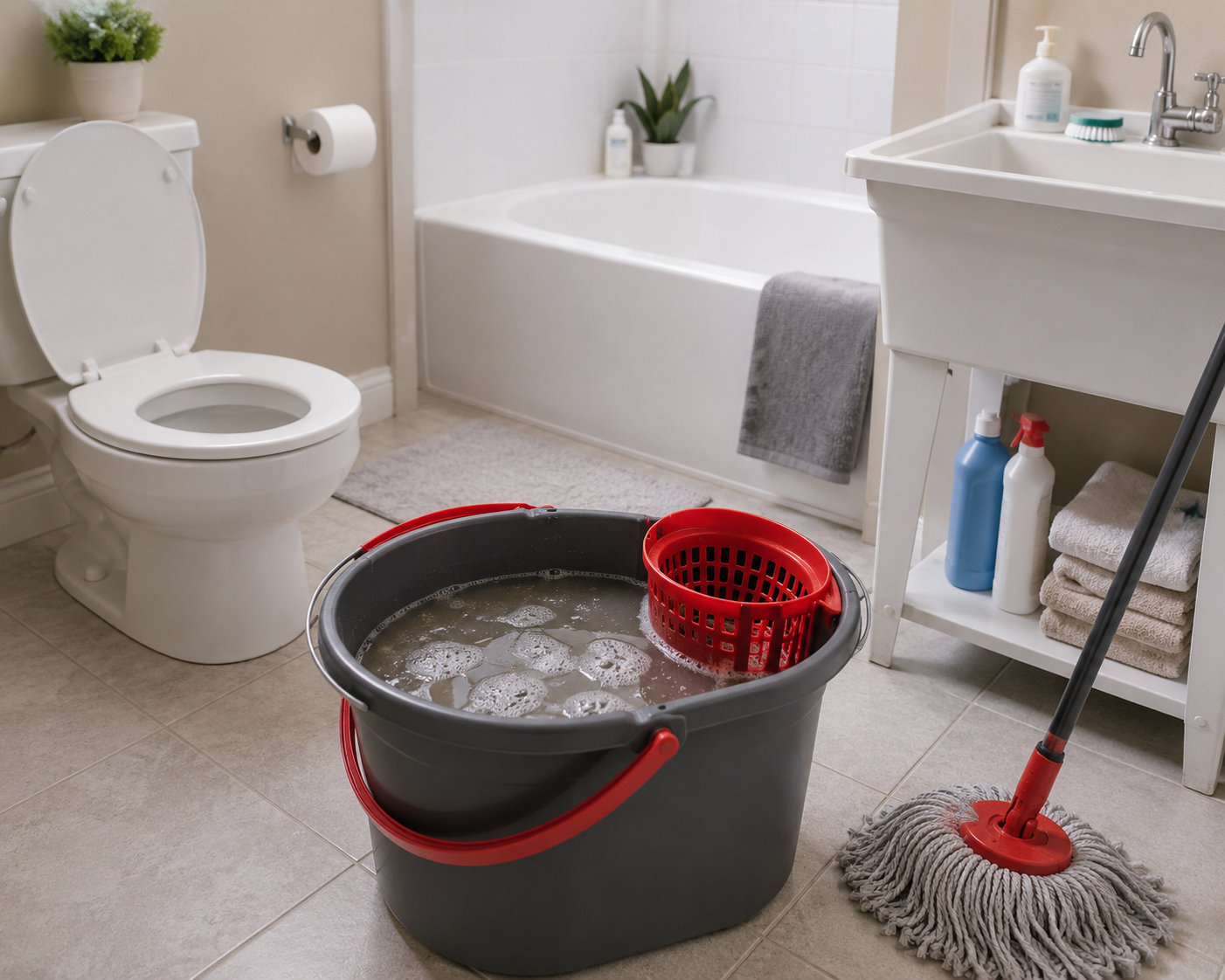
Dirty mop water contains much more than visible dust. After cleaning your floors, the bucket often holds dirt, hair, small particles, leftover cleaning solution, and other debris collected from around the house. To keep your home hygienic and avoid plumbing issues, it’s important to choose an appropriate place to dispose of this wastewater instead of emptying it into the nearest drain.
Whenever your home has a utility or laundry sink, that is typically the most practical choice. These sinks are designed for household cleaning tasks and can handle dirty water more effectively than fixtures used for personal hygiene. If a utility sink is not available, many homeowners use the toilet, as it is built to carry waste safely through the home’s plumbing system and can generally manage suspended debris better than smaller drains.
Bathtubs should be considered only when other suitable options are unavailable. Because bathtubs are used for bathing, they should be rinsed and cleaned thoroughly after any cleaning water is poured into them. Before disposing of mop water, it’s also helpful to remove larger debris such as hair or lint from the bucket to reduce the chance of clogging household drains. Always follow the directions on your cleaning products, especially if your home uses a septic system, and never pour cleaning solutions into storm drains or onto the ground.
Developing good disposal habits helps protect both your plumbing and your living space. If you’re cleaning in another person’s home or a shared property, it’s considerate to ask where they prefer cleaning water to be emptied and to leave the disposal area clean afterward. By using a utility sink whenever possible, choosing the toilet as a practical alternative, and treating the bathtub as a last option, you can keep your cleaning routine efficient, responsible, and home-friendly.