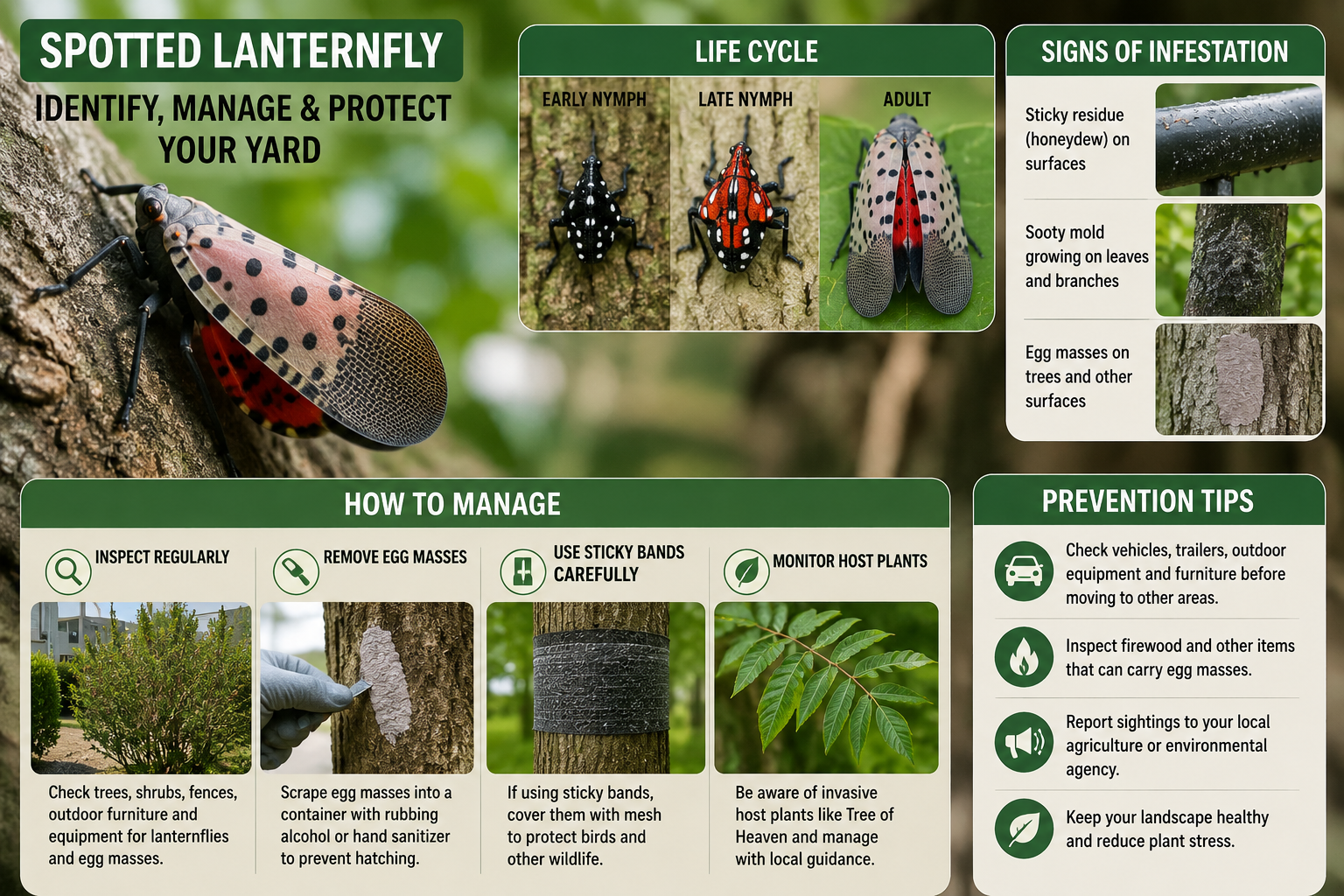
A healthy yard can sometimes show subtle signs that an unwanted visitor has arrived. One of the earliest clues may be a sticky coating on outdoor furniture, patios, vehicles, or nearby plants. This residue, known as honeydew, is produced by spotted lanternflies as they feed on plant sap. Over time, the sugary coating can encourage the growth of dark sooty mold on leaves and branches, reducing a plant’s ability to receive sunlight efficiently. Recognizing these early warning signs allows homeowners to respond before larger infestations develop and helps keep gardens and landscapes in better condition.
Learning to recognize the spotted lanternfly throughout its life cycle is an important part of effective management. Young nymphs are small, black, and covered with white spots before developing bright red, black, and white markings as they mature. Adult lanternflies have gray wings decorated with black spots and reveal striking red hindwings when they open their wings. These insects feed by piercing stems and extracting sap from many types of trees, vines, and ornamental plants. While a single insect is unlikely to cause major damage, repeated feeding by large populations can place significant stress on plants and reduce their overall health.
Regular inspections are one of the most effective ways to reduce future infestations. Check trees, fences, outdoor furniture, trailers, and other surfaces for lanternflies or their egg masses, which often resemble patches of dried mud during autumn and winter. When egg masses are found, they can be carefully scraped into a sealed container containing rubbing alcohol or hand sanitizer to help prevent them from hatching. If sticky bands are used on tree trunks to monitor or capture young insects, protective mesh should always be installed to reduce the risk of trapping birds, squirrels, and other beneficial wildlife.
Long-term prevention also involves making your property less attractive to spotted lanternflies. Monitor for invasive host plants, such as the Tree of Heaven, and seek guidance from local agricultural or environmental authorities before removing or treating them. Before moving vehicles, outdoor equipment, trailers, or firewood, inspect them carefully since egg masses can easily be transported to new locations. By combining regular monitoring, responsible removal practices, and recommendations from local experts, homeowners can help protect their landscapes while supporting broader efforts to limit the spread of this invasive insect.