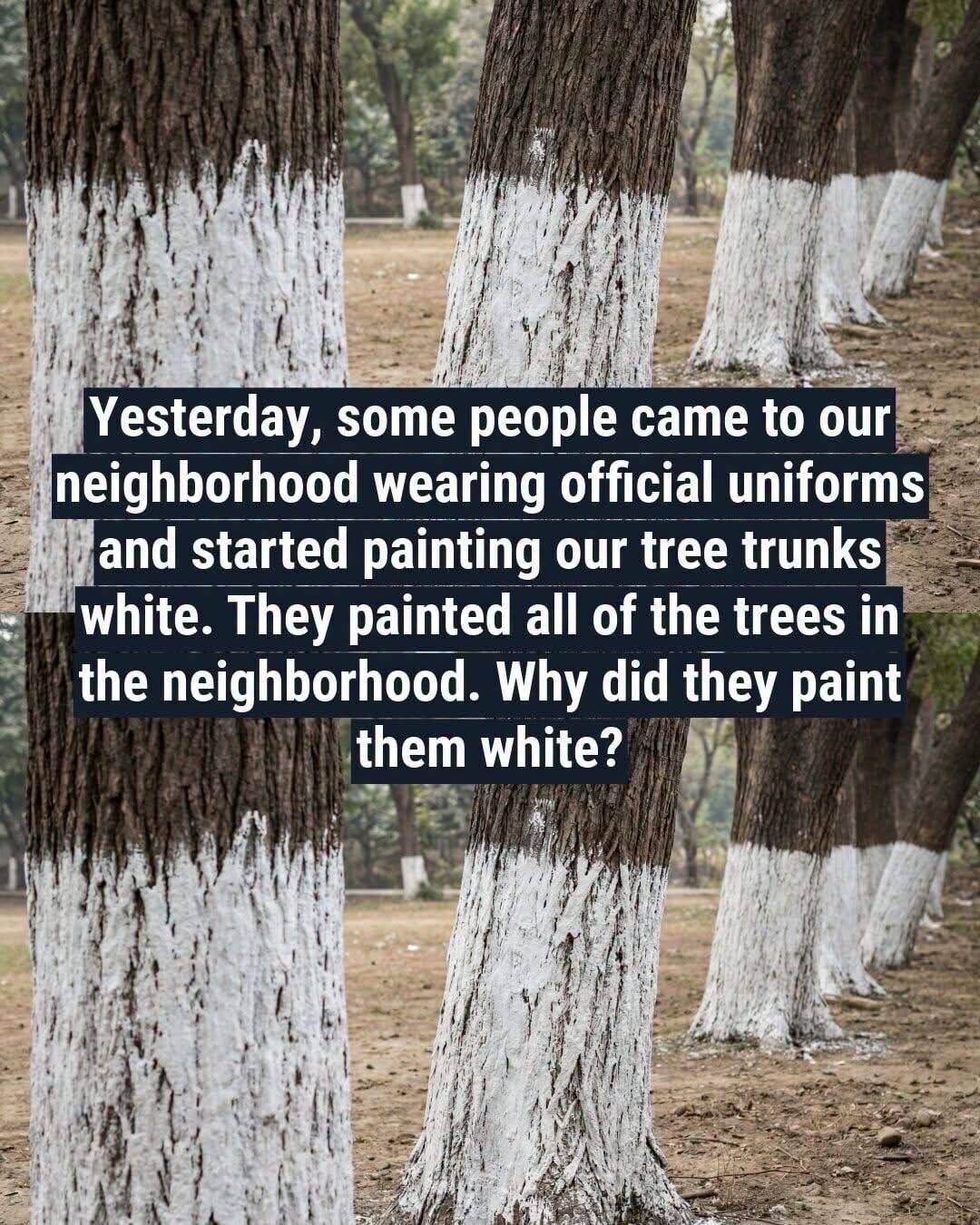
If you have ever walked through a neighborhood, orchard, or garden and noticed tree trunks painted white, you may have wondered about the reason behind it. While the appearance can seem decorative at first glance, the practice actually serves a practical purpose. Tree caretakers have used this technique for many years to help protect trees from environmental stress, particularly during seasons when temperatures fluctuate dramatically between sunny days and cold nights.
One of the primary reasons for applying a white coating is to reflect sunlight. During winter and early spring, direct sunlight can warm a tree’s bark during the day, only for temperatures to drop sharply after sunset. These rapid changes may place stress on the outer layers of the trunk. By reflecting a portion of the sunlight, the light-colored coating helps moderate temperature swings and supports the tree’s natural resilience. Young trees and fruit trees are especially likely to benefit from this extra layer of protection.
Many gardeners prefer using diluted water-based latex paint because it is easy to apply and provides effective coverage. The mixture is often brushed onto the lower portion of the trunk, creating a protective barrier while still allowing the tree to breathe naturally. Some caretakers also use specially designed tree-protection products that serve a similar purpose. Regular inspections and seasonal maintenance help ensure the coating remains effective throughout the year.
Beyond its practical benefits, a white-painted trunk is often a sign that someone is actively caring for the landscape. It reflects attention to detail and a long-term commitment to tree health. While tree markings can sometimes indicate boundaries, maintenance plans, or other purposes, a white trunk is most commonly associated with protection and preservation. This simple practice demonstrates how small preventive measures can help support healthy, thriving trees for years to come.