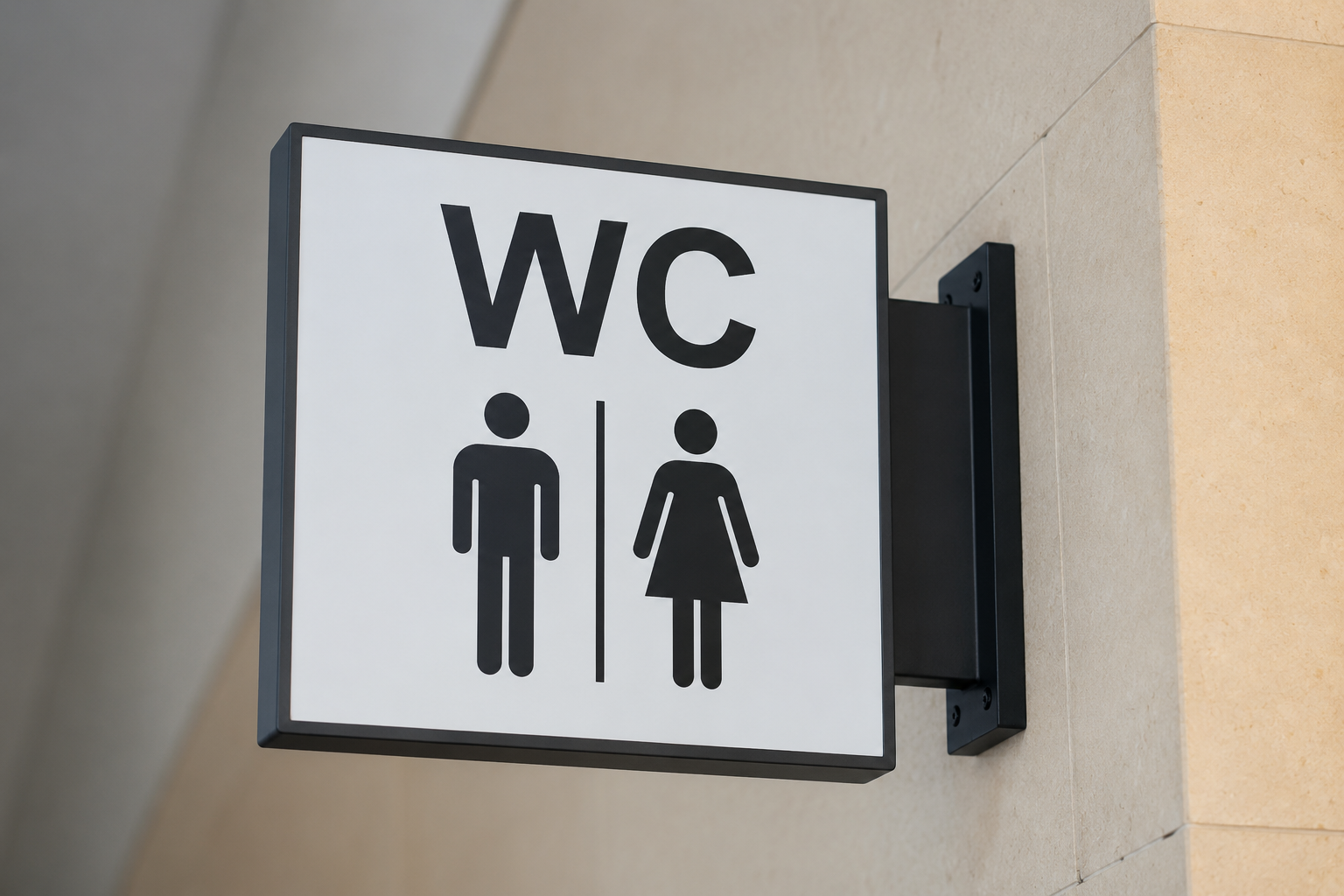
Traveling to different countries often reveals how everyday language can vary from place to place. A facility known as a restroom in one country may be called a bathroom, washroom, lavatory, or loo in another. While the purpose remains the same, the terminology reflects local customs and traditions. Among the many signs people encounter, one abbreviation continues to spark curiosity: “WC.” Although widely recognized, its original meaning is often a mystery to modern travelers.
The letters “WC” stand for “Water Closet,” a term that emerged during the nineteenth century as indoor plumbing became more common. At the time, homes were beginning to adopt flushable toilets, which represented a major improvement in sanitation and convenience. These toilets were frequently installed in small, enclosed rooms separate from bathing areas. Because the space contained a water-powered toilet and functioned like a compact closet, the term “water closet” gradually became part of everyday vocabulary.
As cities expanded and public infrastructure improved, the abbreviation “WC” began appearing on signs in hotels, railway stations, restaurants, and public buildings. The shortened form was practical, easy to recognize, and useful for visitors regardless of language. Over the years, spoken language evolved, and people increasingly adopted terms such as restroom, bathroom, or toilet. However, the familiar “WC” marking remained in use across many regions, particularly in Europe and parts of Asia, where it continues to guide people to sanitation facilities today.
The lasting presence of “WC” offers a fascinating glimpse into the history of modern plumbing and public hygiene. What appears to be a simple abbreviation actually reflects an era of technological progress and changing living standards. The next time you see a “WC” sign, you may recognize it as more than a direction to a restroom—it is a small reminder of how language, design, and innovation have shaped everyday life over generations.