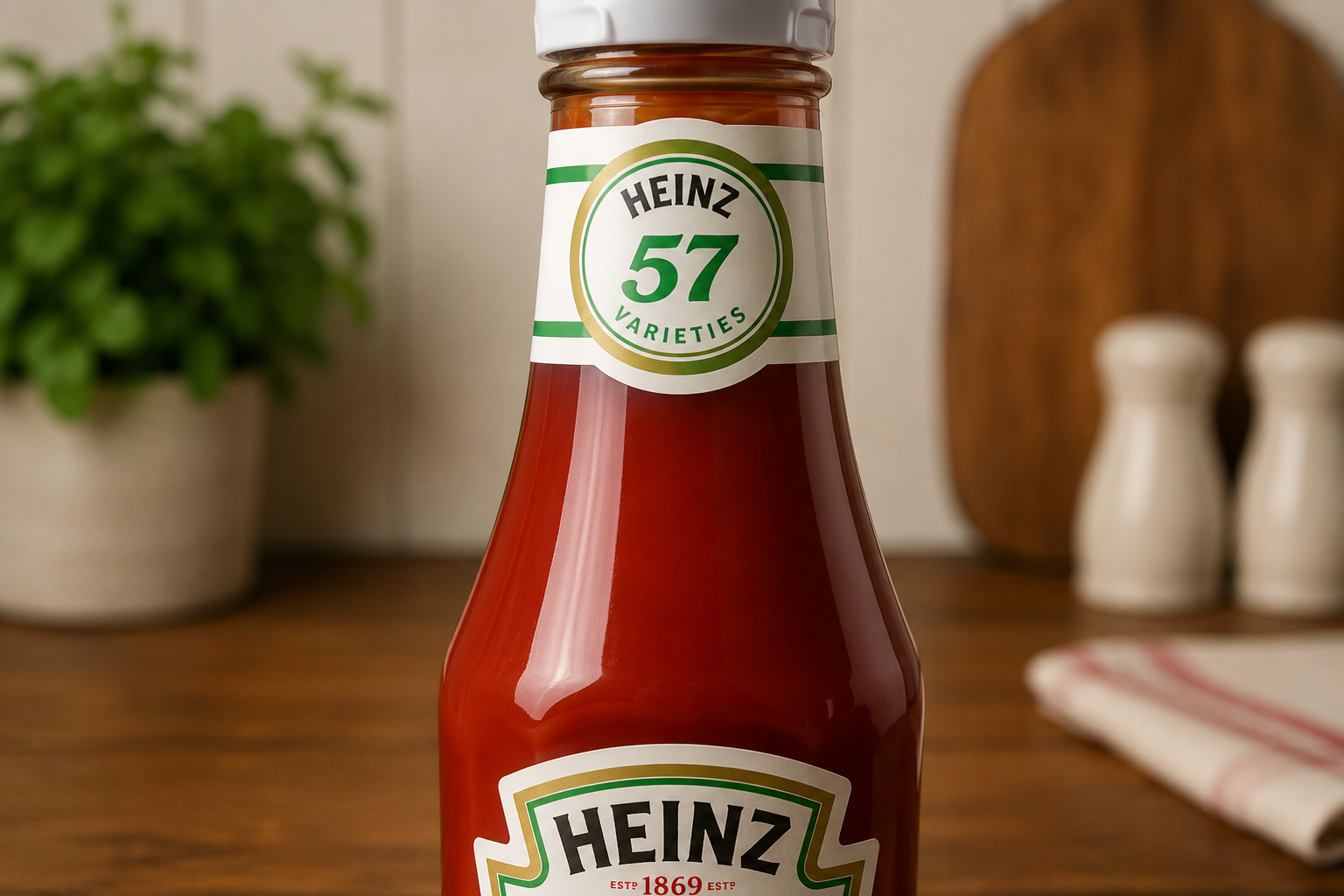
In the modern business world, companies invest enormous resources into understanding what captures consumer attention. Marketing specialists analyze trends, customer behavior, and brand recognition in an effort to create messages that people remember. Long before digital analytics existed, however, some entrepreneurs possessed an exceptional instinct for understanding how people think. One of the most notable examples was Henry J. Heinz, whose company became one of the most recognizable names in the food industry. While millions recognize the famous “57 Varieties” slogan, few know the surprising story behind its creation.
Many people naturally assume that “57 Varieties” referred to the exact number of products the company offered at the time. In reality, the story is far more interesting. During a train journey in the late nineteenth century, Henry Heinz noticed an advertisement featuring a specific number used to promote another product. The idea caught his attention and inspired him to think about how numbers influence memory and perception. At that point, Heinz already produced more than 57 products, but he believed the number itself had a memorable quality that would help consumers remember the brand more easily.
The choice proved remarkably successful. Rather than focusing on precise product counts, the slogan communicated variety, confidence, and abundance in a simple and memorable way. The number 57 felt distinctive compared with round figures that often blend into the background. It was easy to remember, easy to recognize, and visually appealing when displayed on packaging and advertisements. Over time, consumers began associating the phrase not just with product variety but with the Heinz brand itself, transforming it into one of the most enduring marketing symbols in business history.
More than a century later, “57 Varieties” remains visible on Heinz products around the world. Its longevity demonstrates the power of clear, memorable communication and the value of understanding human psychology. The slogan’s success was not based on complex marketing formulas but on a simple idea presented in a way that captured attention and stayed in people’s minds. It serves as a lasting reminder that some of the most effective branding concepts are often the simplest, combining creativity, consistency, and a deep understanding of what people remember.