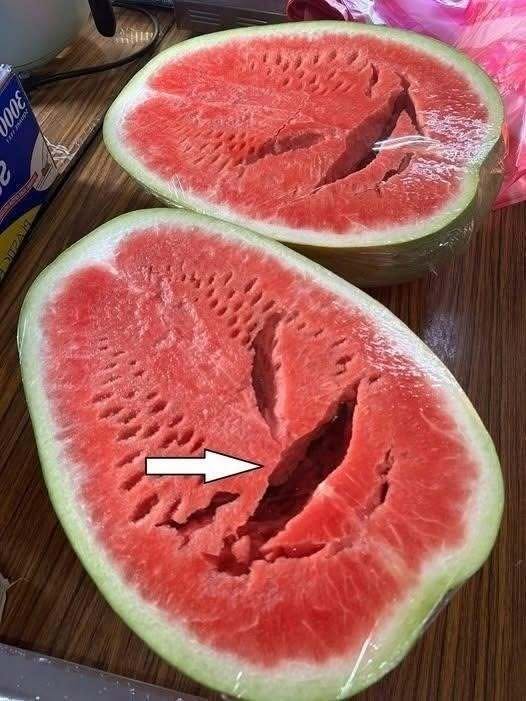
Cutting into a watermelon only to discover cracks or hollow spaces inside can catch anyone off guard. Online rumors often suggest that these internal splits are a sign of harmful chemicals or unsafe growing practices. However, food experts explain that the reality is usually far less alarming. In many cases, internal cracking is a natural occurrence linked to growing conditions rather than a warning sign of danger.
Several factors can contribute to these unusual patterns inside a watermelon. Rapid growth, fluctuations in temperature, inconsistent watering, and natural ripening processes can all cause the fruit’s flesh to separate slightly, creating visible cracks or hollow areas. Like many fruits, watermelons respond to environmental changes during development, and these variations can sometimes affect their internal appearance without impacting overall quality.
Understanding how to evaluate a watermelon begins with looking beyond a single visual feature. A fresh watermelon should feel heavy for its size, have a firm outer rind, and display a creamy yellow field spot where it rested on the ground while growing. After cutting it open, pay attention to the fruit’s aroma and texture. Fresh watermelon should smell clean and sweet, with crisp, juicy flesh that feels firm rather than mushy.
The most important rule is to focus on signs of freshness rather than assumptions. Small internal cracks alone do not automatically indicate that a watermelon is unsafe to eat. However, if you notice mold, a sour smell, excessive softness, sliminess, or an unusual flavor, it is best to discard the fruit. By learning how to recognize the difference between natural imperfections and genuine spoilage, shoppers can reduce unnecessary food waste and enjoy watermelon with greater confidence throughout the season.