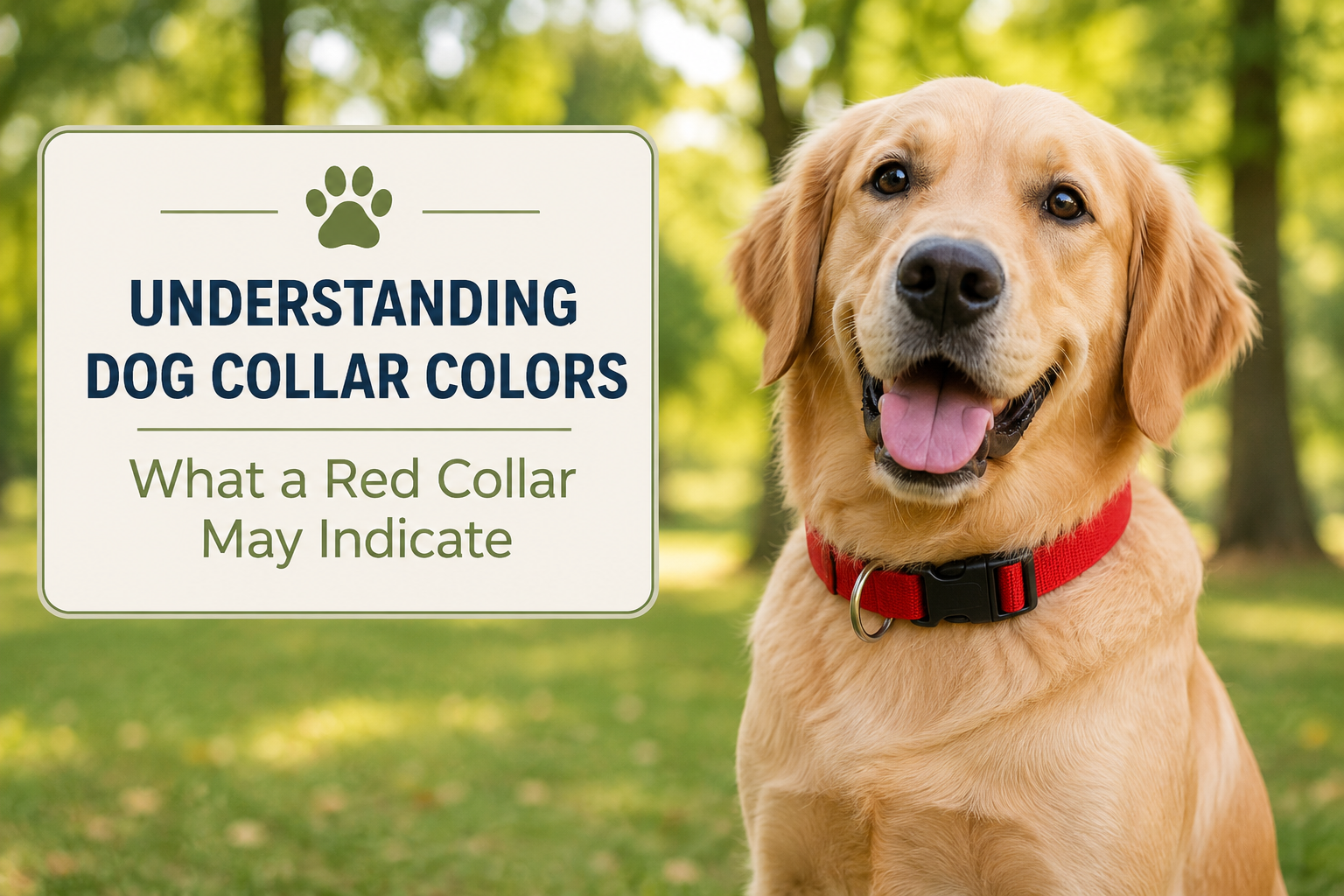
A dog’s collar can communicate more than identification or style. In recent years, color-coded collars and accessories have become valuable tools for helping owners share important information about their pets. Among these colors, red is commonly used to indicate that a dog may need extra personal space and should not be approached without first checking with the owner. This simple visual cue helps create safer and more comfortable experiences for both dogs and the people around them.
The meaning behind a red collar is often misunderstood. It does not automatically suggest that a dog is aggressive. In many cases, the dog may be recovering from an illness, adjusting to a new environment, undergoing training, or simply feeling nervous around unfamiliar people or animals. Some dogs are naturally more sensitive to unexpected interactions, and the red collar serves as a polite reminder that every pet has unique needs and comfort levels. Recognizing this signal encourages a more respectful approach to meeting dogs in public spaces.
When encountering a dog wearing a red collar, the best practice is to pause and ask the owner before attempting any interaction. Allowing the handler to guide the situation helps prevent unnecessary stress and ensures the dog remains comfortable. Observing body language can also provide helpful clues. A relaxed posture generally indicates comfort, while signs such as hesitation, avoidance, or tension may suggest the dog would prefer additional space. Respecting these signals contributes to positive experiences for everyone involved.
The growing awareness of collar color meanings reflects a broader commitment to responsible pet ownership and community safety. Small actions, such as understanding what a red collar represents, can make public spaces more welcoming for dogs with different personalities, health conditions, and training needs. By taking a moment to respect these visual cues, people help create an environment built on patience, understanding, and consideration—qualities that strengthen the bond between humans and their canine companions.