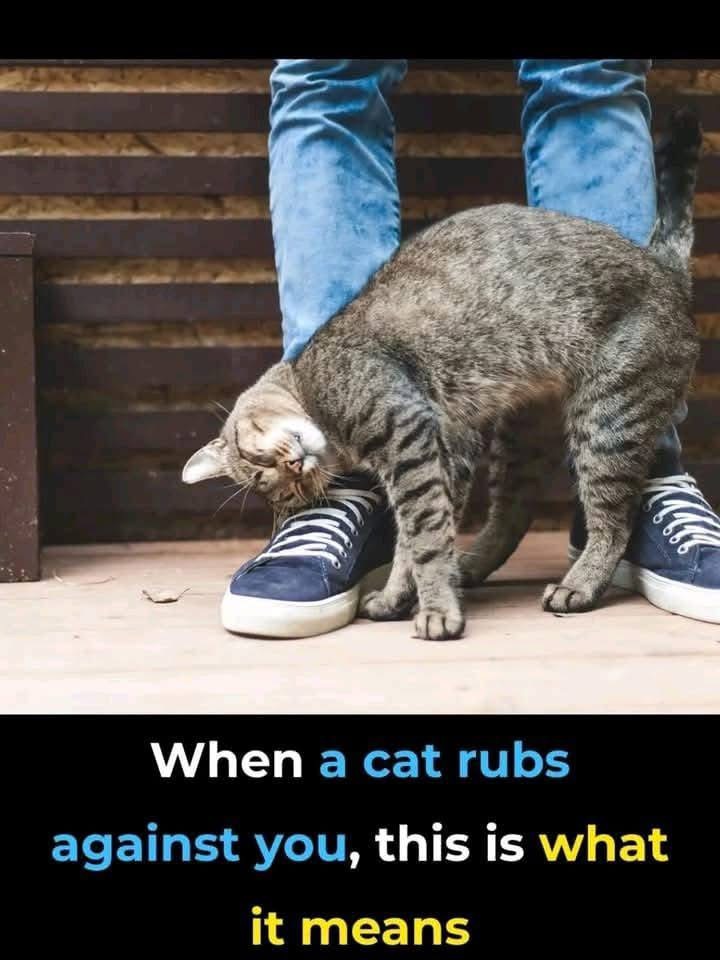
Few everyday moments feel as comforting as a cat gently weaving around your legs or pressing its head against your hand after you walk through the door. To many pet owners, the behavior simply feels affectionate and calming. But feline rubbing is actually a meaningful form of communication that combines trust, familiarity, and social bonding in one quiet gesture. What may seem like a simple habit is often one of the clearest ways cats express comfort and connection with the people they trust most.
One of the primary reasons cats rub against people is greeting behavior. Unlike humans, cats do not communicate affection through handshakes or hugs. Instead, rubbing serves as a warm welcome and a sign of recognition. A cat approaching with a raised tail, soft purring, and gentle body contact is often showing comfort and happiness in your presence. This type of interaction is especially common when owners return home after being away, reinforcing a familiar social bond.
Scent also plays an important role in the behavior. Cats have scent glands located around their cheeks, forehead, chin, and tail area. When they rub against a person, furniture, or even another animal, they leave behind subtle pheromones that help create a sense of familiarity and security. In the feline world, shared scent is closely connected to trust and belonging. By transferring their scent onto you, a cat is often including you within its trusted environment and daily routine.
Beyond communication, rubbing behavior can also help cats feel calm and emotionally balanced. Physical contact and familiar scents may reinforce feelings of comfort, safety, and stability in their environment. Over time, these small interactions strengthen the relationship between cats and their owners. In a busy world filled with distractions, a cat’s quiet nudge or gentle head press can become a simple but meaningful reminder of companionship, trust, and the unique bond shared between people and their pets.