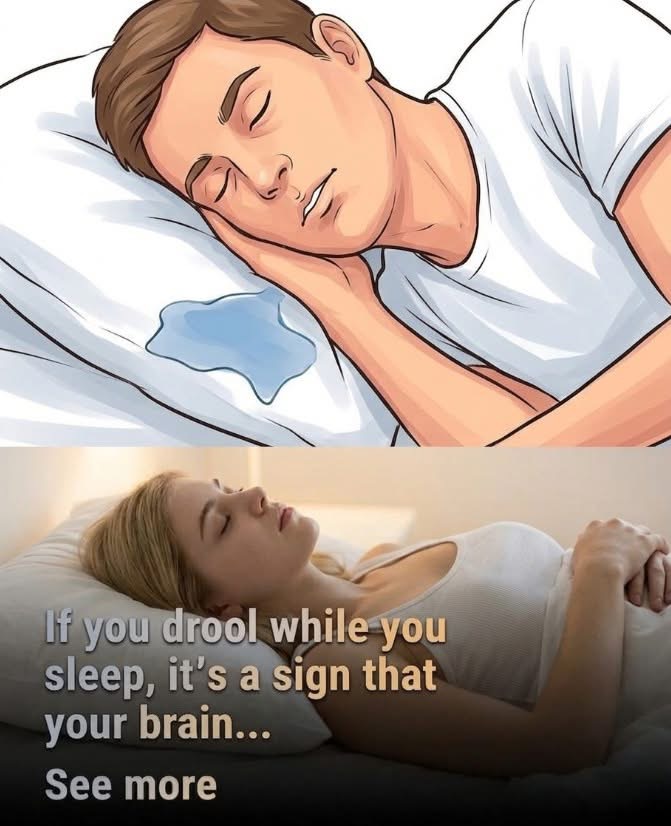
Waking up to a damp pillow can feel embarrassing to some people, but occasional drooling during sleep is actually very common and is usually harmless. During deeper stages of sleep, the muscles throughout the body naturally relax, including those involved in swallowing. As swallowing slows down, saliva may collect in the mouth and escape more easily, especially during long periods of uninterrupted rest. In most situations, this is simply a normal part of the body’s sleep process rather than a sign of a serious health issue.
Sleeping position often plays a major role in how noticeable drooling becomes. People who sleep on their side or stomach are generally more likely to experience saliva leakage because gravity allows saliva to move outward more easily. Mouth breathing can also increase nighttime drooling, particularly when nasal passages are blocked due to allergies, colds, congestion, or sinus irritation. Certain medications and alcohol consumption may additionally relax muscles further during sleep, which can contribute to increased saliva buildup overnight.
Other factors may sometimes influence saliva production as well. Acid reflux, for example, can trigger the body to produce extra saliva in response to stomach acid irritation near the throat. Temporary dental or gum irritation may also affect saliva levels. In many cases, addressing the underlying issue — such as improving nasal airflow, managing congestion, or maintaining good oral hygiene — may help reduce drooling naturally over time. Staying hydrated and slightly elevating the head during sleep may also improve comfort and airflow for some individuals.
Although occasional drooling is generally considered normal, sudden or persistent changes should not be ignored if they occur alongside symptoms such as difficulty swallowing, facial weakness, or speech changes. In those situations, medical evaluation may be important to rule out underlying concerns. For most people, however, mild nighttime drooling simply reflects the body entering a deeply relaxed state during healthy sleep and does not usually require treatment.