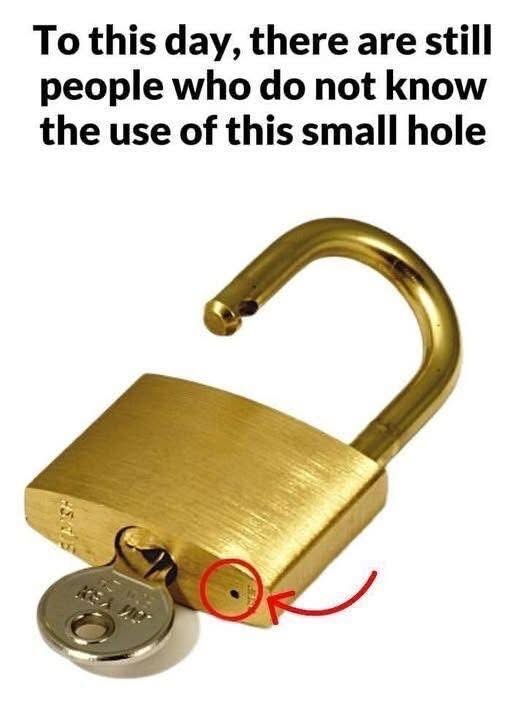
Most people use a padlock without giving it a second thought—insert the key, turn it, and move on. Yet, if you examine one closely, you’ll notice a small opening at the bottom. This subtle feature isn’t accidental; it plays a practical role in keeping the lock functional over time. Understanding how such details work can help you maintain everyday items more effectively and extend their lifespan with minimal effort.
One of the primary purposes of this small hole is to manage moisture. Since padlocks are often exposed to outdoor conditions, water can easily enter the internal mechanism. Without a way to escape, that moisture could lead to rust and corrosion, eventually causing the lock to jam. The opening acts as a drainage point, allowing water to exit and helping preserve the internal components. This simple design choice ensures the lock remains reliable even in changing weather conditions.
In addition to drainage, the same opening makes maintenance much easier. Over time, dust, debris, or cold temperatures can affect how smoothly a lock operates. By applying a small amount of lubricant through the hole, you can reach the internal parts directly and restore proper movement. This quick step can prevent unnecessary replacements and keep the lock working efficiently with very little effort.
Interestingly, this kind of thoughtful design is not limited to padlocks. Many everyday items include small, often overlooked features that serve important purposes—from tools designed for extra grip and leverage to clothing details that help with care and durability. By paying closer attention to these elements, you can better understand how common objects are engineered and make more informed use of them in your daily routine.