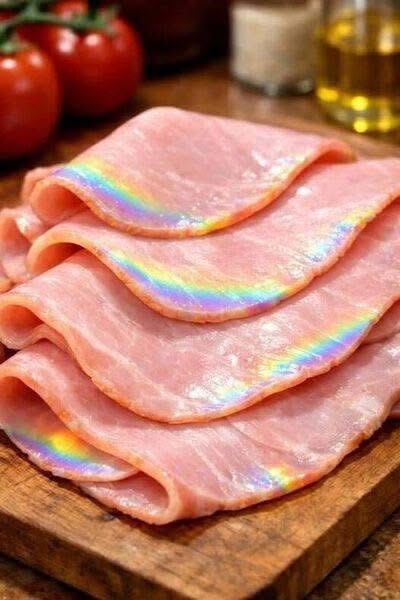
Many people pause the first time they notice a rainbow-like sheen on sliced deli ham. The shifting greens, purples, and blues can look unusual and raise questions about quality or safety. While the appearance may seem concerning, color alone doesn’t tell the full story. To understand what’s happening, it helps to look at how light interacts with the surface of the meat.
In most cases, this iridescent effect is harmless. It occurs when light reflects off the tightly packed muscle fibers in thin slices, creating a prism-like display similar to what you might see on a soap bubble. Surface moisture and common curing ingredients can make the effect more visible, but they don’t indicate spoilage. In other words, the sheen is a visual phenomenon, not a sign that the product is unsafe.
What matters more are the practical indicators of freshness. Pay attention to color changes beyond the natural pink tone, as well as texture and smell. Fresh deli ham should feel smooth and have a mild, neutral scent. If it becomes sticky, develops an unusual odor, or shows dull or uneven discoloration, those are clearer signs that it should not be consumed. Relying on these sensory cues provides a more accurate assessment than appearance alone.
Proper storage also plays a key role in maintaining quality. Once opened, deli meats should be kept sealed and refrigerated and are best used within a few days. Even under cold conditions, freshness declines over time. By combining good storage habits with careful observation, you can make informed decisions and handle deli products with confidence.