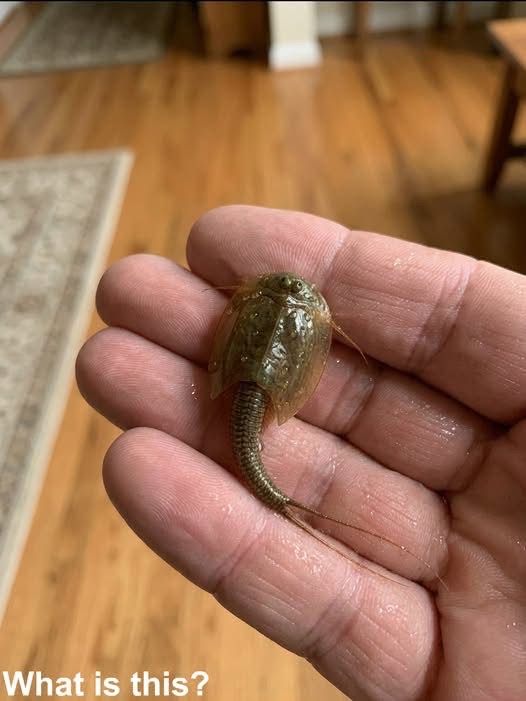
After hours of steady rain, the neighborhood felt transformed. Water pooled in low areas, and a nearby drainage ditch had turned into a temporary stream. As the skies cleared, curiosity drew attention to a small, murky pocket of water left behind. Beneath its surface, something moved with unusual energy—an unfamiliar shape that seemed out of place in such an ordinary setting, sparking both intrigue and caution.
At first, the creature’s appearance felt unsettling. Its small body, shield-like form, and constant motion made it seem almost otherworldly. Yet rather than jumping to conclusions, taking a closer look and seeking reliable information revealed a far more fascinating reality. The organism turned out to be a Triops, a tiny crustacean often described by scientists as a “living fossil,” known for its remarkable resilience and long evolutionary history.
What makes this discovery so compelling is not its appearance, but its story. Triops belong to a lineage that has existed for hundreds of millions of years, surviving dramatic changes in the planet’s environment. Their ability to endure comes from a unique adaptation: they produce dormant eggs that can remain inactive in dry soil for extended periods, only hatching when conditions become favorable again—such as after rainfall fills temporary pools.
Encounters like this are a reminder that nature’s most extraordinary examples of survival are often found in the most unexpected places. With a bit of observation and understanding, what initially seems unfamiliar can become a source of appreciation and learning. In everyday environments, small discoveries can reveal the depth and resilience of life, encouraging a more mindful connection with the world around us.