Around the world, the place we use for personal hygiene goes by many names—bathroom, restroom, toilet, or even “loo.” These differences are shaped by language, culture, and local habits. In the United States, “bathroom” and “restroom” are widely used in public and private spaces, while in the United Kingdom and parts of Europe, people are more likely to say “toilet” or “lavatory.” Though the terms vary, they all refer to the same essential function in daily life.
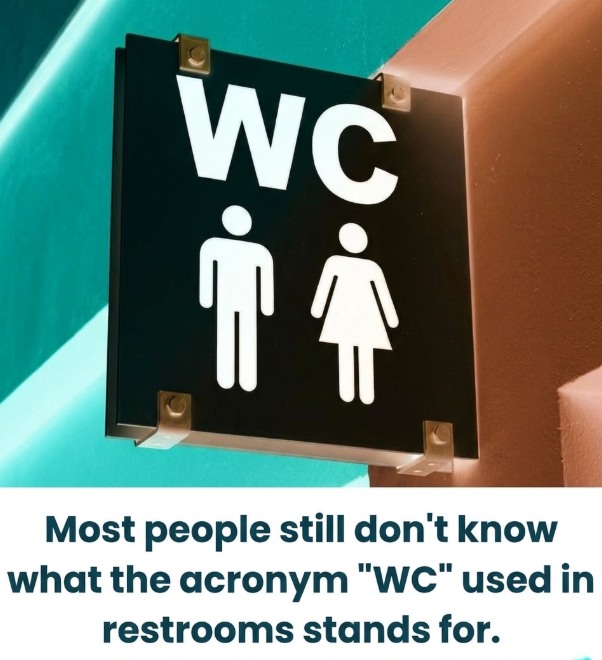
One label that often catches travelers by surprise is “WC.” Short for “water closet,” this term dates back to the 19th century, when indoor plumbing was still evolving. At the time, homes began to include small, separate rooms with flushable toilets, distinct from bathing areas. The phrase “water closet” described this new, compact space, highlighting the innovation of having running water integrated into sanitation.
As plumbing systems improved and became standard, the terminology remained. Over the years, “WC” became a practical and widely recognized abbreviation, especially in public spaces such as airports, train stations, and hotels. Even today, it continues to appear on signs across many countries, offering a simple, universal way to indicate restroom facilities regardless of language differences.
Despite its common use, not everyone is familiar with the origin of “WC,” which can lead to moments of curiosity. This small detail shows how everyday language carries traces of history, even in the most ordinary places. While words may differ from one region to another, the purpose remains the same—providing a clean, private space for basic needs, while quietly preserving a piece of the past in modern life.