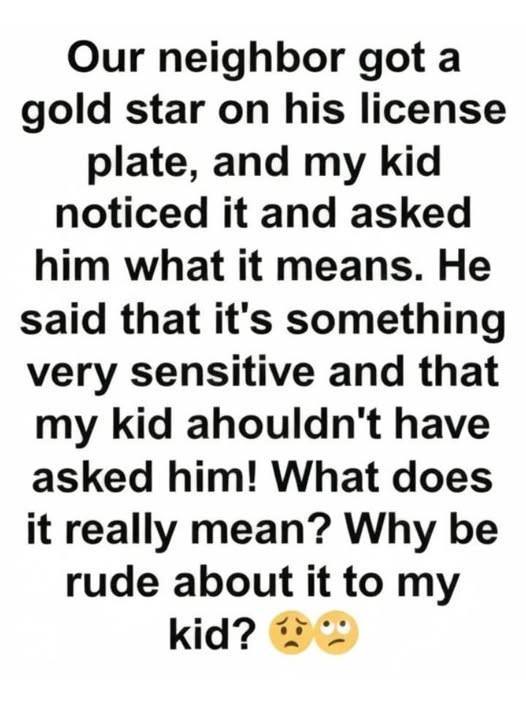
A small symbol can spark big questions, especially for children who notice details others might overlook. A gold star on a license plate may seem like a simple design at first glance, but it often carries a deeper meaning. The first step is awareness—recognizing that some public symbols are tied to personal stories and experiences that deserve thoughtful attention.
In the United States, the gold star is closely associated with families who have lost a loved one in military service. The tradition dates back to the era of World War I, when families displayed service banners with blue stars for those serving. If a service member died, the blue star was replaced with gold. Today, this symbol continues through programs such as the Gold Star Families recognition, including commemorative license plates offered in many states as a sign of honor and remembrance.
Because of this meaning, reactions to questions about the symbol can vary. For some, it represents a deeply personal loss, and discussing it may bring strong emotions. A practical approach is to respect boundaries—understanding that curiosity is natural, but timing and tone matter. Not every symbol invites immediate conversation, and some people may prefer to share their story only when they feel ready.
This moment can also serve as a gentle lesson in empathy. Encouraging children to ask questions thoughtfully and with sensitivity helps build awareness and respect for others’ experiences. By approaching situations like this with understanding rather than assumption, we create space for more considerate interactions and a stronger sense of community.