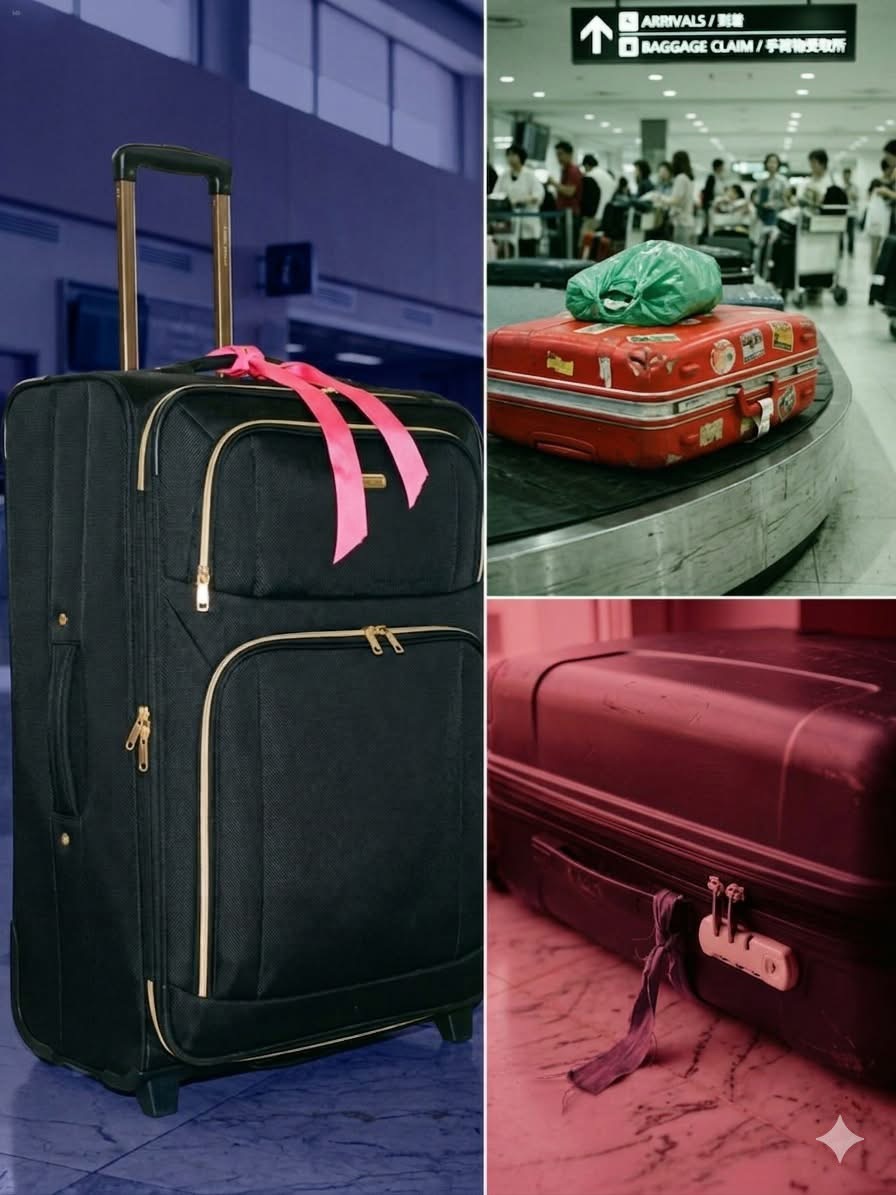
Anyone who travels regularly knows the moment—standing by the carousel, scanning a sea of nearly identical suitcases. To solve this, many travelers add bright ribbons or scarves to their bag handles, hoping to spot them faster. While the idea seems practical, it’s worth understanding how airport systems work before choosing this approach. A small adjustment in how you label your luggage can make a noticeable difference in how smoothly it moves through the process.
Modern airports use automated conveyor belts and scanning technology designed to move bags quickly and efficiently. These systems function best when luggage has a clean, compact shape. Loose accessories, like ribbons or dangling fabric, can sometimes interfere with that flow. In certain cases, they may catch on equipment or be pulled loose, creating minor delays or even causing wear to the suitcase itself. Keeping your bag streamlined helps it move through these systems with fewer interruptions.
Another important factor is how luggage is tracked. Each bag is routed using a barcode tag that must remain fully visible for scanners to read it correctly. If anything partially covers that code—even briefly—the system may not register it. When this happens, the bag is often set aside for manual handling, which can slow down its journey, especially during busy travel periods or tight flight connections. Ensuring the tag is unobstructed is one of the simplest ways to avoid unnecessary delays.
A more effective approach is to choose identification methods that don’t interfere with airport equipment. Opt for suitcases in distinctive colors or patterns, or use flat, secure labels and handle wraps that stay close to the surface. These options make your bag easy to recognize while maintaining compatibility with automated systems. By keeping your luggage simple and well-marked, you can help ensure it arrives safely, efficiently, and right on time.