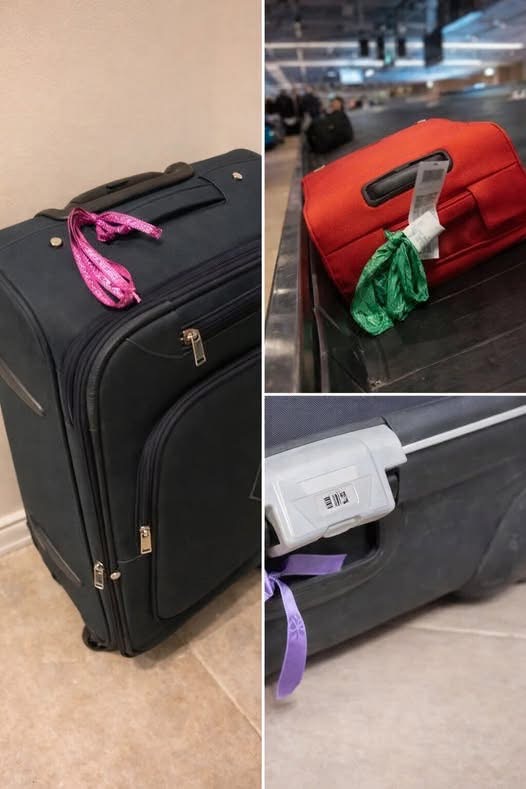
Air travel often inspires small habits that promise convenience and peace of mind. One popular trick is tying a colorful ribbon or fabric strip to a suitcase handle to make it easier to spot at baggage claim. At first glance, this approach seems practical—adding a bright marker to help distinguish your bag from many similar ones. Over time, this tip has been widely shared among travelers as a simple way to reduce confusion and save time after landing.
However, modern airport systems operate with a high level of precision that depends on consistency. Behind the scenes, luggage moves through automated handling networks designed to process thousands of bags efficiently. These systems rely on clear identification and predictable shapes to function smoothly. Even small, loose additions—like ribbons or decorative tags—can introduce unexpected variables that affect how luggage is processed, sometimes leading to delays or additional manual checks.
The key factor in baggage handling is the barcode tag attached at check-in. This label contains essential routing information and is positioned carefully for rapid scanning as the suitcase moves along conveyor systems. When objects such as ribbons shift or cover part of the tag, scanners may have difficulty reading the information instantly. In such cases, the system may redirect the bag for manual inspection, removing it from the streamlined flow and increasing the time it takes to reach its destination.
A more effective approach is to keep luggage simple and clearly identifiable without interfering with its structure. Opting for a distinctive suitcase color, using a built-in luggage tag, or placing a subtle identifier that stays flat against the bag can help maintain both visibility and efficiency. By understanding how baggage systems work, travelers can make small adjustments that support smoother handling—helping ensure their luggage arrives on time while still being easy to recognize.