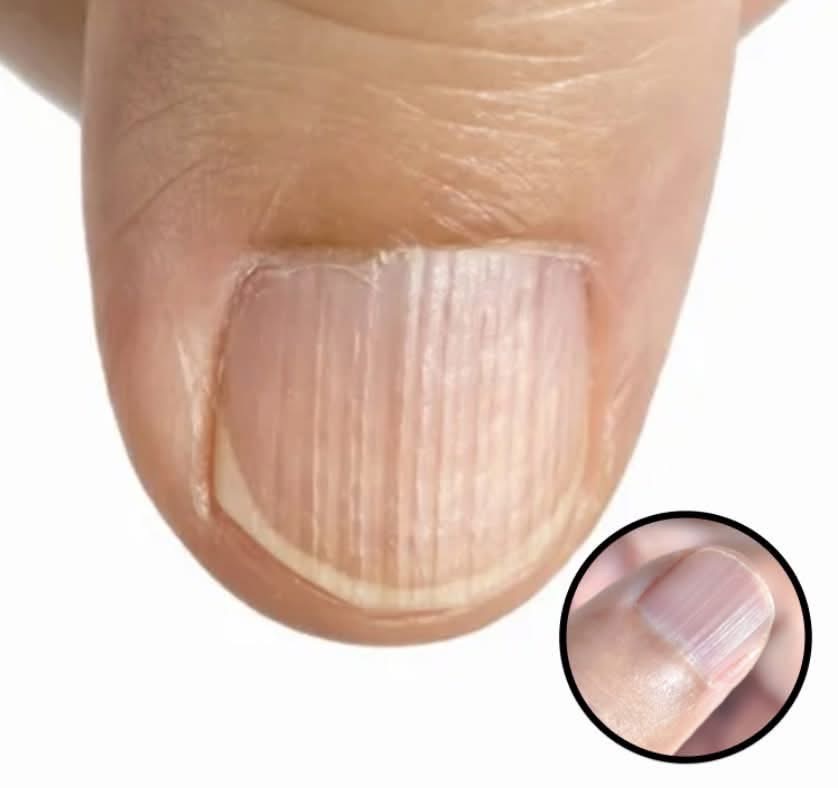
Subtle changes in your nails can sometimes reflect what’s happening inside the body. As we age, it’s common to notice variations in texture or color, but certain patterns—especially lines—may deserve a closer look. While many of these changes are harmless, understanding them can help you stay aware of your overall well-being and know when to seek professional advice.
Horizontal grooves, often referred to as Beau’s lines, may appear after periods of physical stress or illness. These lines can form when nail growth temporarily slows down. Vertical ridges, on the other hand, are more common with age and are usually not a cause for concern. However, if they become very deep, uneven, or suddenly more noticeable, they could be associated with nutritional imbalances, such as low levels of certain vitamins or minerals.
In some cases, more distinct changes require prompt attention. Dark streaks that appear suddenly and do not fade should always be evaluated by a healthcare professional, as they can sometimes be linked to more serious conditions. Similarly, pale or white horizontal lines—known as Muehrcke’s lines—may be connected to changes in protein levels or certain organ functions, though only proper medical evaluation can determine the cause.
The key takeaway is awareness. Nail changes after the age of 40 should not be ignored, especially if they appear suddenly or are accompanied by other symptoms. Paying attention to these signs and consulting a qualified healthcare provider when needed can support early detection and peace of mind. Your nails can serve as a small but meaningful indicator of your overall health when observed with care.