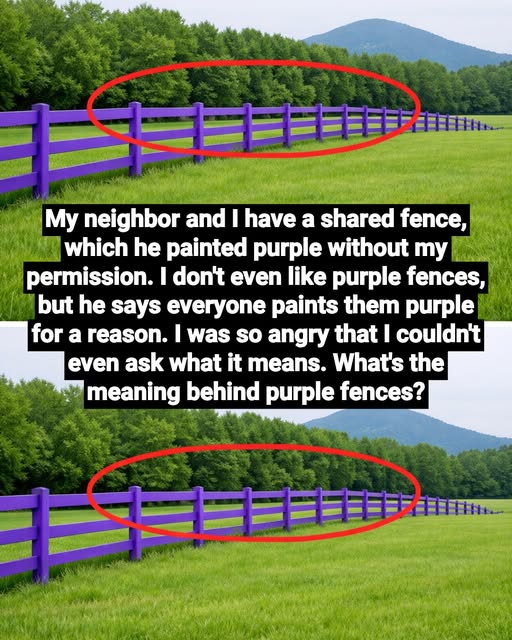
At first glance, a fence or tree marked in bright purple might seem like an unusual design choice, but in many regions it carries a clear and practical message. Rather than serving as decoration, this color is often used to indicate that the land beyond a certain point is private. For passersby, hikers, or neighbors, these markings act as a visual cue to respect boundaries and avoid entering without permission.
The use of purple paint developed as a durable alternative to traditional warning signs. In rural areas especially, signs can easily fade, fall, or be removed over time. Paint, on the other hand, is long-lasting and highly visible from a distance. Because of these advantages, some regions—particularly within the United States—recognize purple markings as an official way to signal restricted access on private property.
To be effective, these markings typically follow consistent placement guidelines. They are often applied as vertical stripes on trees or fence posts, positioned at a visible height so they can be easily noticed. The markings are also spaced at regular intervals along property lines to maintain clarity and continuity, ensuring that anyone approaching the area understands the boundary without confusion.
It’s important to note that recognition of this system can vary depending on local regulations, so property owners should always verify applicable rules before relying on it. For the general public, however, the safest interpretation remains straightforward: when you see purple markings, it’s best to stop and respect the boundary. What may appear to be a simple color choice is, in fact, a widely understood signal of private land and responsible awareness.