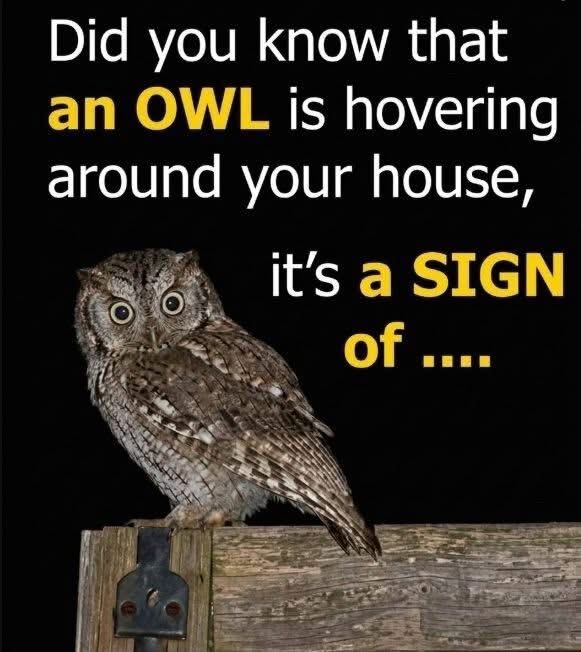
On calm evenings, when the noise of the day fades and the landscape settles into stillness, owls move through the darkness with remarkable ease. These nocturnal birds, part of the order Strigiformes, are known for their quiet flight and distinctive presence. Their specially adapted feathers reduce sound, allowing them to glide almost silently, while their large forward-facing eyes give them a focused and alert appearance. Often, their presence is sensed through a distant call or a fleeting shadow, adding to their reputation as mysterious creatures of the night.
From a biological perspective, owls are highly specialized hunters. Many species possess unevenly positioned ears, a feature that helps them detect sounds with impressive accuracy, even when prey is hidden beneath foliage or snow. Combined with strong night vision, this ability allows them to locate food efficiently in low-light conditions. Their diet typically includes small mammals, insects, and occasionally other birds, depending on the environment. Owls are found in a wide range of habitats, from dense forests to open fields and even urban settings, demonstrating their adaptability and resilience.
Throughout history, owls have held a place in cultural traditions and storytelling. In some societies, they are associated with knowledge and awareness, while in others they are linked to mystery or change. These interpretations often reflect human attempts to understand the natural world and assign meaning to what is not easily explained. Observing or hearing an owl can inspire a moment of reflection, as their quiet behavior and nighttime activity naturally draw attention to the surrounding environment.
Despite their symbolic interpretations, owls are simply animals shaped by evolution and survival needs. Their ability to remain still during the day, along with their camouflaged feathers, helps them avoid detection, while their nighttime habits support effective hunting. Whether seen perched in silence or heard calling after dark, owls highlight the balance of nature—where adaptation, awareness, and instinct come together. Understanding these birds encourages a deeper appreciation for wildlife and the subtle dynamics of the ecosystems they inhabit.