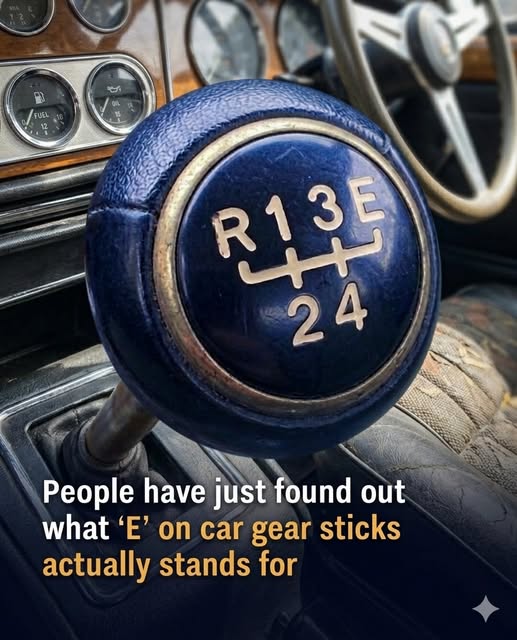
For many drivers, gear selectors have always been a familiar guide—letters and numbers that quietly direct how a vehicle moves, stops, or reverses. Manual cars typically display numbered gears with an “R” for reverse, while automatic vehicles use “P,” “R,” “N,” and “D” to simplify driving. However, some older cars included an additional letter—“E”—a feature that often surprises newer drivers who may have never encountered it before.
The “E” represented “Economy,” a setting designed to help reduce fuel consumption. When activated, it adjusted how the vehicle shifted gears, encouraging smoother driving and lower engine speeds. This often meant earlier gear changes and less aggressive acceleration, which together helped conserve fuel. At a time when efficiency was becoming increasingly important, this feature gave drivers a practical way to manage consumption without changing their driving habits too drastically.
As automotive technology progressed, the need for a dedicated economy setting on the gear selector gradually disappeared. Modern vehicles now rely on advanced systems that automatically balance performance and efficiency. Engine management software, improved transmissions, and real-time sensors handle these adjustments seamlessly. In many cases, similar features still exist but are accessed through buttons or digital menus rather than a physical gear marking.
Looking back, the “E” serves as a reminder of how driving has evolved over time. It reflects an era when mechanical controls offered more visible choices, allowing drivers to interact directly with their vehicle’s behavior. Today’s systems may be more automated, but understanding these past features adds depth to the driving experience and highlights the steady progress of automotive design.