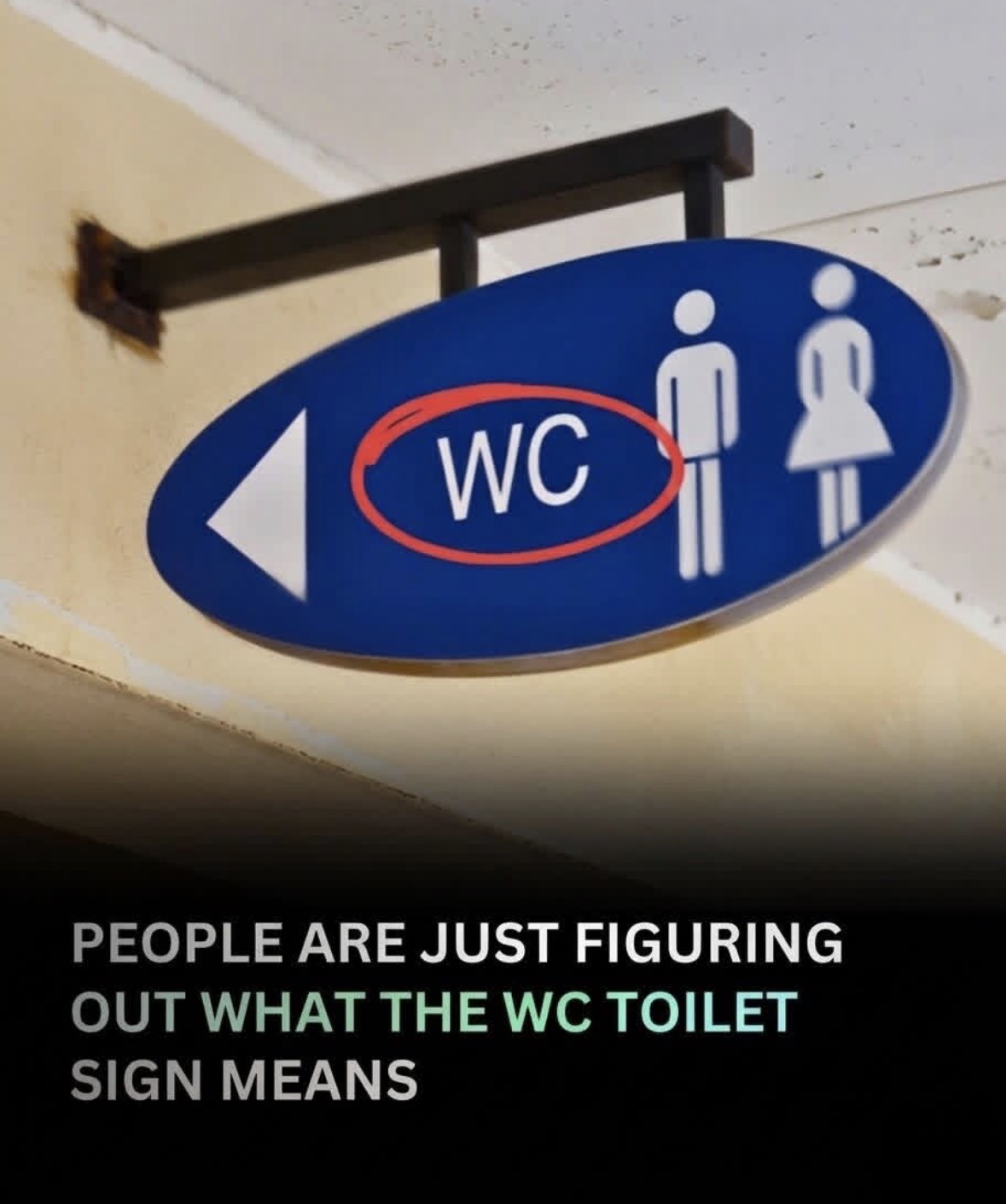
While traveling, you may come across the letters “WC” on a door and pause for a moment before realizing what they represent. Unlike more familiar terms such as “bathroom” or “restroom,” this abbreviation can feel unfamiliar at first. Yet, those two simple letters carry a long history and serve as a practical solution for communication in shared public spaces. Recognizing them becomes one of those small but helpful skills that make navigating new places easier.
The term “WC” stands for “water closet,” a phrase that originated in 19th-century England during the rise of indoor plumbing. At a time when sanitation systems were evolving, this term described a private space equipped with a flushing toilet connected to a water supply. It marked a significant improvement in comfort and hygiene compared to earlier methods. Over time, the abbreviation “WC” became a convenient way to label these facilities, especially in buildings where clear and concise signage was important.
As modern plumbing spread across different countries, language adapted in various ways. In some regions, softer or more indirect terms became common, while others continued using “WC” for its simplicity. Because it is short and easy to recognize, the abbreviation proved especially useful in public places such as hotels, airports, and train stations. It gradually became a familiar sign for travelers, regardless of their native language.
Today, “WC” remains a practical example of how communication evolves to meet global needs. Often paired with symbols or local language labels, it helps people quickly identify facilities without confusion. What began as a technical term has turned into a widely understood visual cue, demonstrating how even small details can connect people across cultures. It’s a reminder that everyday signs often carry more history and purpose than we might expect.