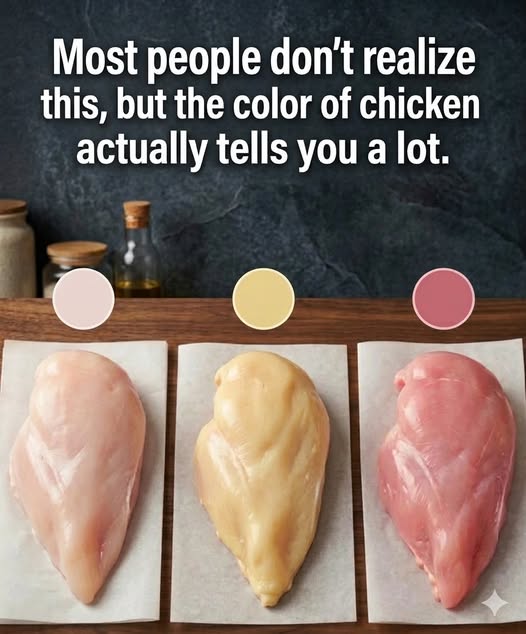
When selecting chicken, many shoppers instinctively judge its quality by color. Some cuts appear pale or slightly pink, while others have a richer yellow hue that may seem more natural or appealing. However, relying on color alone can be misleading. The appearance of chicken is influenced by several factors, and understanding these can help you make more informed and confident choices at the store.
A useful starting point is to recognize what affects color in the first place. Lighter chicken is often associated with birds raised in controlled indoor environments, where diet and growth conditions are carefully managed. On the other hand, a yellow tint typically comes from feed that includes natural pigments such as corn or plant-based ingredients. This difference in diet—not necessarily quality—is what primarily changes the meat’s appearance.
To make a smarter selection, it’s important to look beyond visual cues and consider how the chicken was raised. Labels such as “organic,” “free-range,” or “pasture-raised” can provide insight into farming practices and animal conditions. Additionally, texture and aroma are reliable indicators of freshness—fresh chicken should feel firm and have a mild, neutral scent. These details often offer more value than color alone.
Ultimately, choosing the right chicken comes down to balancing knowledge with personal preference. By understanding what influences appearance and focusing on clear indicators like labeling and freshness, you can select products that align with your priorities—whether that’s flavor, sourcing, or budget. A thoughtful approach turns a simple purchase into a more informed and satisfying decision.