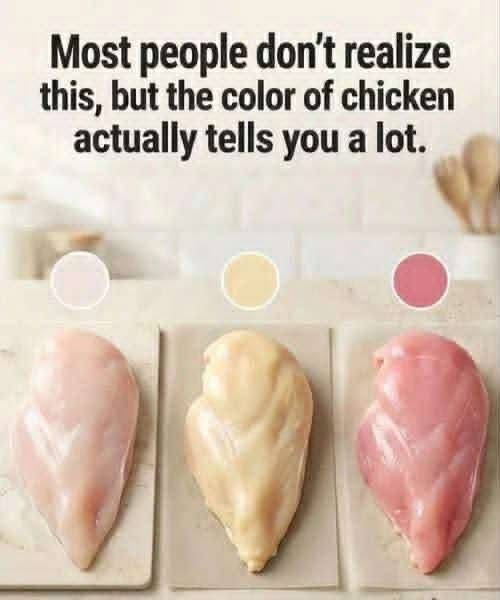
When shopping for chicken, it’s common to notice differences in color—some cuts appear pale, while others have a richer yellow tone. At first glance, it may seem like color alone can reveal which option is fresher or more natural. However, appearance can be misleading. Understanding what influences these variations can help you make more informed and confident choices in your daily cooking routine.
The first step is recognizing that color is primarily influenced by the chicken’s diet and environment. Lighter-colored meat is often associated with birds raised in controlled, indoor systems where feed is standardized. These methods are widely used because they allow for consistent production and affordability. While this type of chicken is commonly found in supermarkets, its appearance does not automatically reflect poor quality or unsafe conditions.
In contrast, chicken with a deeper yellow hue is typically linked to feed that includes natural pigments found in ingredients like corn or plants. Birds raised in more open or varied environments may also develop firmer texture due to increased movement. This can influence flavor and overall eating experience. However, it’s important to note that color alone does not guarantee how the chicken was raised, as feed can sometimes be adjusted to influence appearance.
For a more reliable approach, focus on labeling and freshness indicators rather than color alone. Terms such as “organic,” “free-range,” or “pasture-raised” can provide insight into farming practices, while checking for a neutral smell and firm texture helps assess quality at the point of purchase. By combining these factors, you can choose chicken that aligns with your preferences—whether you prioritize taste, budget, or production methods—while maintaining a balanced and informed perspective.